
It’s a sensation everyone knows: you exit a dark cinema into the afternoon blaze, and for a few painful moments, the world is a white void. Your eyes scream in protest, pupils scrambling to catch up. That sudden, overwhelming brightness is a universal human experience, yet it’s something video games almost never bother to simulate. They might paint a sunny skybox, but they rarely make you feel the light. Dead Island 2, even four years after its release, remains a stunning exception. It uses light not just as a visual flourish, but as a core part of its identity.

Walk out of a dimly lit mansion in Bel-Air, and the screen doesn’t just get brighter. It goes supernova. For a second or two, all a player can see is an intense blanket of white, the shapes of zombies and wreckage completely bleached out. This is the game’s pupil-adjustment effect, and it’s nothing short of brilliant. Often, when standing inside a powerless building and looking out through a shattered door frame, the exterior world dissolves into a blinding overexposure. Details are sacrificed for pure, painful light. Then, as the virtual eyes adapt, the scene resolves into the familiar carnage of HELL-A. It’s a subtle feature, but it transforms how the world feels.
Dambuster Studios didn’t invent this trick. Rockstar’s Red Dead Redemption 2 had a similar effect when exiting a dark tunnel into the open plains—a fleeting blindness that sold the world’s tangibility. But in Dead Island 2, the mechanic feels essential rather than ornamental. The game is set in a post-apocalyptic Los Angeles, and that golden Californian sunlight is almost a character in itself. The glare, the heat haze rising off the pavement, the way shadows cut with razor sharpness—it all screams West Coast. This isn’t the gloomy, desaturated horror of many zombie titles. It’s a sun-bleached nightmare where the terror is served with a side of Vitamin D.
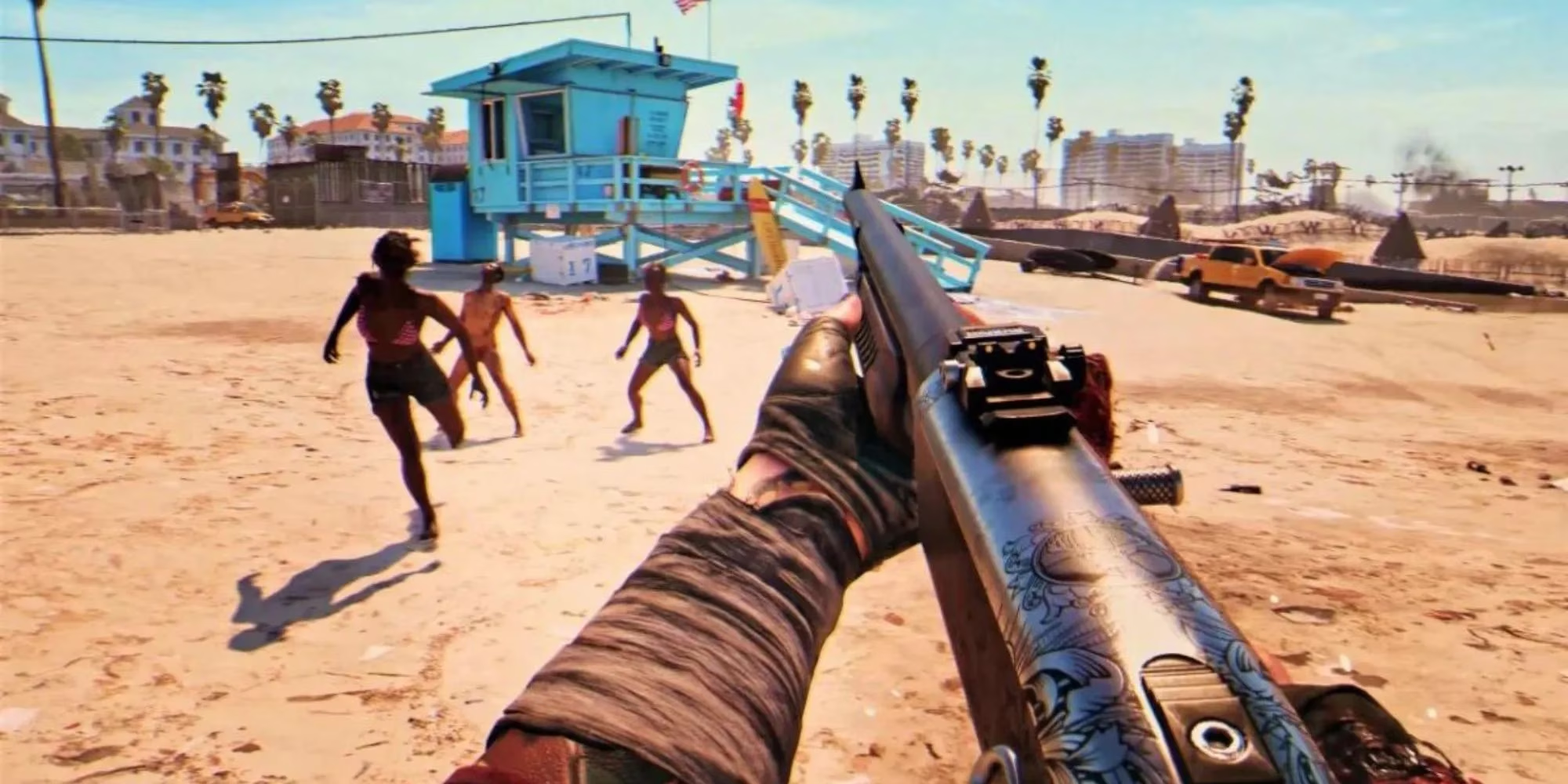
The choice to embrace brightness fundamentally alters the tone. Horror typically thrives in darkness, where unseen threats lurk. But Dead Island 2 daringly rejects that formula, following a path trodden by films like Ari Aster’s Midsommar, which staged its most disturbing sequences under an unblinking sun. Here, the undead don’t need shadows to be scary; the sheer chaos of dismemberment feels more grotesque when you can see every glistening sinew in high contrast. It makes the game feel vibrant, almost defiant. Players find themselves wanting to be outside, sprinting through the blinding streets of Venice Beach, despite knowing that’s exactly where the horde waits. The game turns a survival instinct on its head: the indoors are safe but dull, while the outside is lethal but visually intoxicating.
What’s especially remarkable is how this lighting design contributes to a sense of place. Yes, Dead Island 2 is packed with absurdly detailed environmental storytelling—meticulously arranged pool floats, Art Deco interiors, and suburban clutter—but the light is what binds it all together. The harsh noon sun bouncing off a Beverly Hills pool creates a palpable sensation of heat. When a slayer trudges into the Santa Monica pier area, the reflection off the ocean is so intense it almost demands a virtual squint. These moments are not just beautiful screenshots; they are invitations to inhabit the space emotionally.

Some players have compared the effect to stepping out of a matinee screening of an old Dreamworks movie, where the real world briefly felt too vivid to handle. That same childlike disorientation lives in Dead Island 2, but with added gore. It’s a design philosophy that shuns the bloated trends of many triple-A games—no endless menus, no ponderous walking sections—and instead focuses on a simple, sensory truth: the world is bright, and it should feel that way.
Even in 2026, with ray tracing and path tracing becoming more common, Dead Island 2’s approach remains uniquely effective. It doesn’t just render light; it simulates the experience of light. Every exit from a building is a tiny narrative beat, a small reset for the player’s senses. Gamers keep coming back not just for the spectacular flesh-rending combat, but for that oddly satisfying moment of temporary blindness. It’s a masterclass in using a single visual trick to define an entire game\u2019s soul. So next time someone picks up the controller and steps out into the impossibly bright streets of HELL-A, they might just remember to blink.
As reported by Rock Paper Shotgun, thoughtful visual design often hinges on how games manipulate perception rather than raw graphical horsepower, and Dead Island 2’s sunlight “pupil adjustment” effect is a prime example: by briefly overexposing the world when stepping from dark interiors into HELL-A’s noon glare, it turns lighting into a gameplay-feel cue that reinforces setting, tension, and orientation—making outdoor spaces simultaneously alluring and threatening in a way conventional bright skyboxes rarely achieve.