
As a lifelong gamer, I've come to expect a certain level of honesty from the games I purchase. We all do. When I hand over my money, I'm not just buying a disc or a digital license; I'm buying into a promise—a promise crafted by trailers, box art, and developer interviews. Most of the time, that promise is fulfilled. But sometimes, a game throws a curveball so wild, so unexpected, that it fundamentally breaks the trust between player and creator. It's a fascinating phenomenon, and looking back from 2026, some of these betrayals have become legendary parts of gaming history. The sting might fade, but the lessons remain.
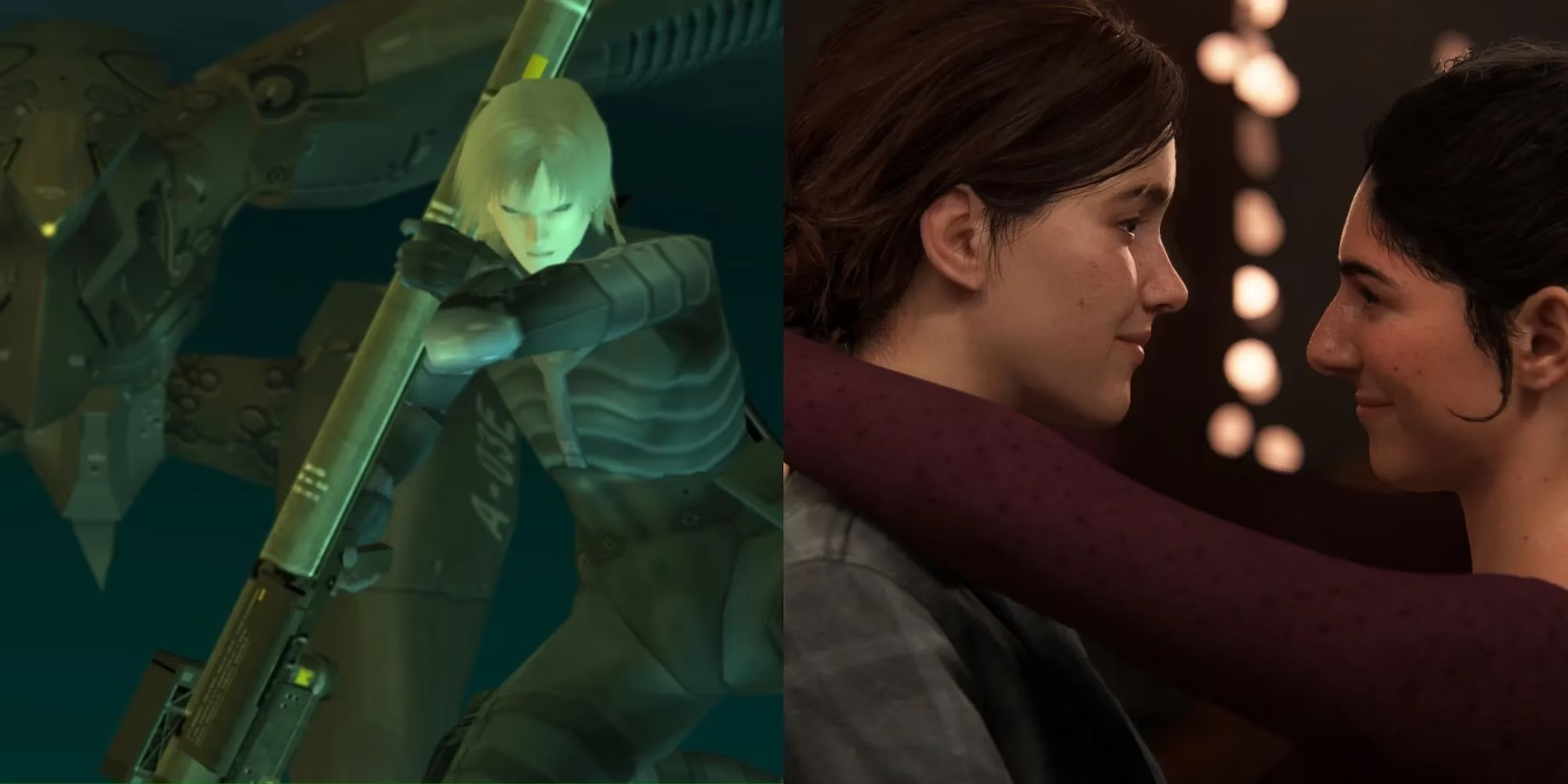
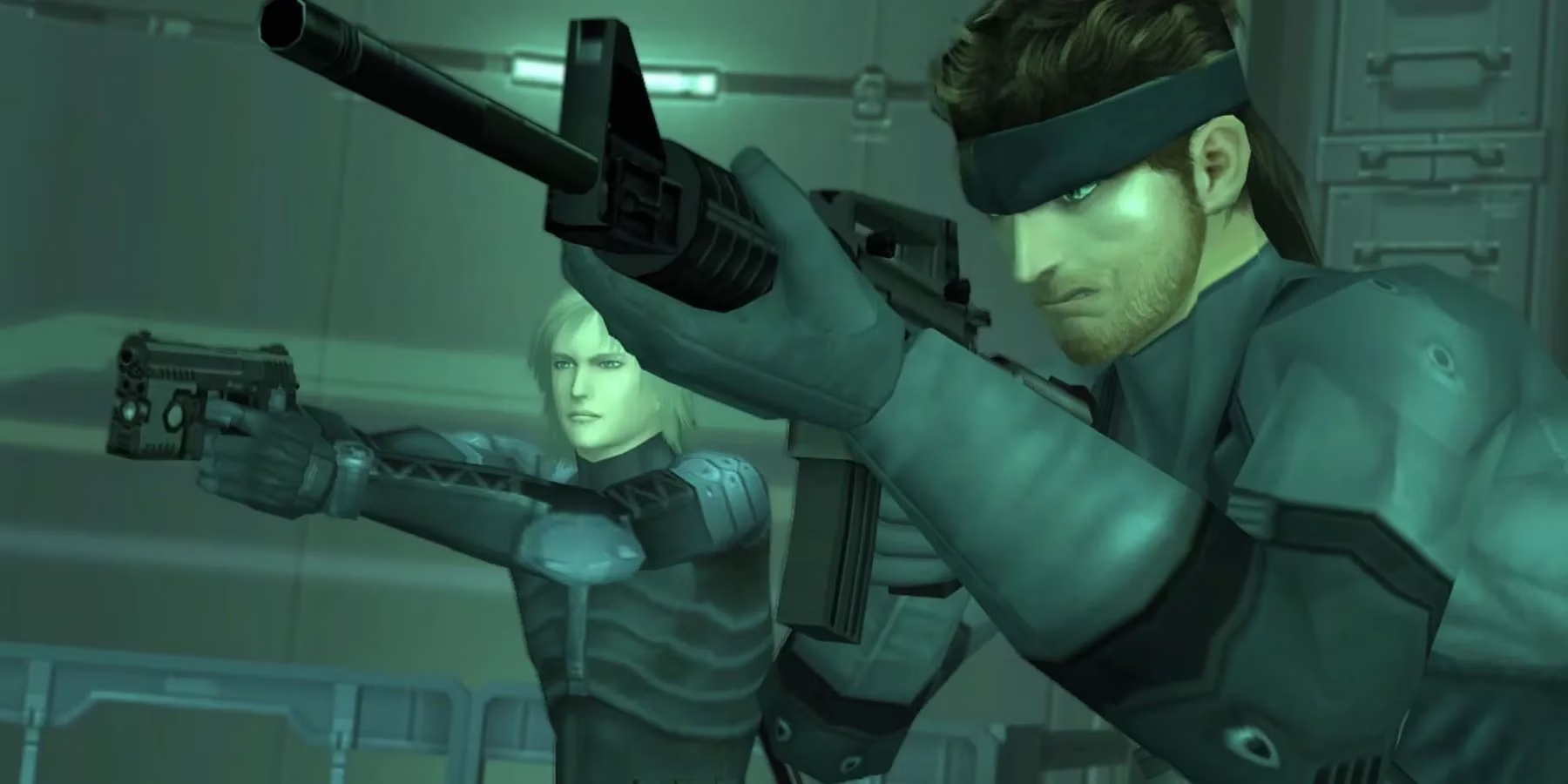
Let's start with one of the most famous bait-and-switches of all time. Metal Gear Solid 2: Sons of Liberty is, without a doubt, a masterpiece. Yet, I remember the palpable sense of confusion and betrayal I felt in 2001. Every piece of marketing, every poster, every screenshot screamed Solid Snake. The incredible demo bundled with Zone of the Enders let me be Snake on that tanker. I was so ready. Then, the full game arrived, and after a brilliant but brief opening act, I was suddenly staring at this blond pretty boy named Raiden. Snake was gone. I was controlling this new character for the vast majority of the journey. My teenage self was furious! It felt like a personal prank by Hideo Kojima. Of course, time has been kind to Raiden and the game's meta-commentary on information control. Now, it's celebrated for its audacity. But in that moment? It was a profound breach of the marketing contract. It taught me that the protagonist on the box isn't always the one you'll play.
Some betrayals aren't about characters, but about the very fabric of reality. On the Nintendo GameCube, amidst a sea of colorful platformers, stood Eternal Darkness: Sanity's Requiem. This game didn't just want to scare me; it wanted to make me question my sanity and my hardware. I'd be exploring a creepy mansion, and suddenly the screen would go black as if my TV died. My heart would stop. Then, a fake "Memory Card Corrupted" notification would pop up. In the early 2000s, before cloud saves, this was a digital nightmare scenario. The thought of losing dozens of hours of progress was genuinely traumatic. Silicon Knights wasn't just breaking the fourth wall; they were kicking it down, running into my living room, and unplugging my console. It was a brilliant, terrifying trick that broke my trust in the game's interface itself. I couldn't even trust the error messages! 😱
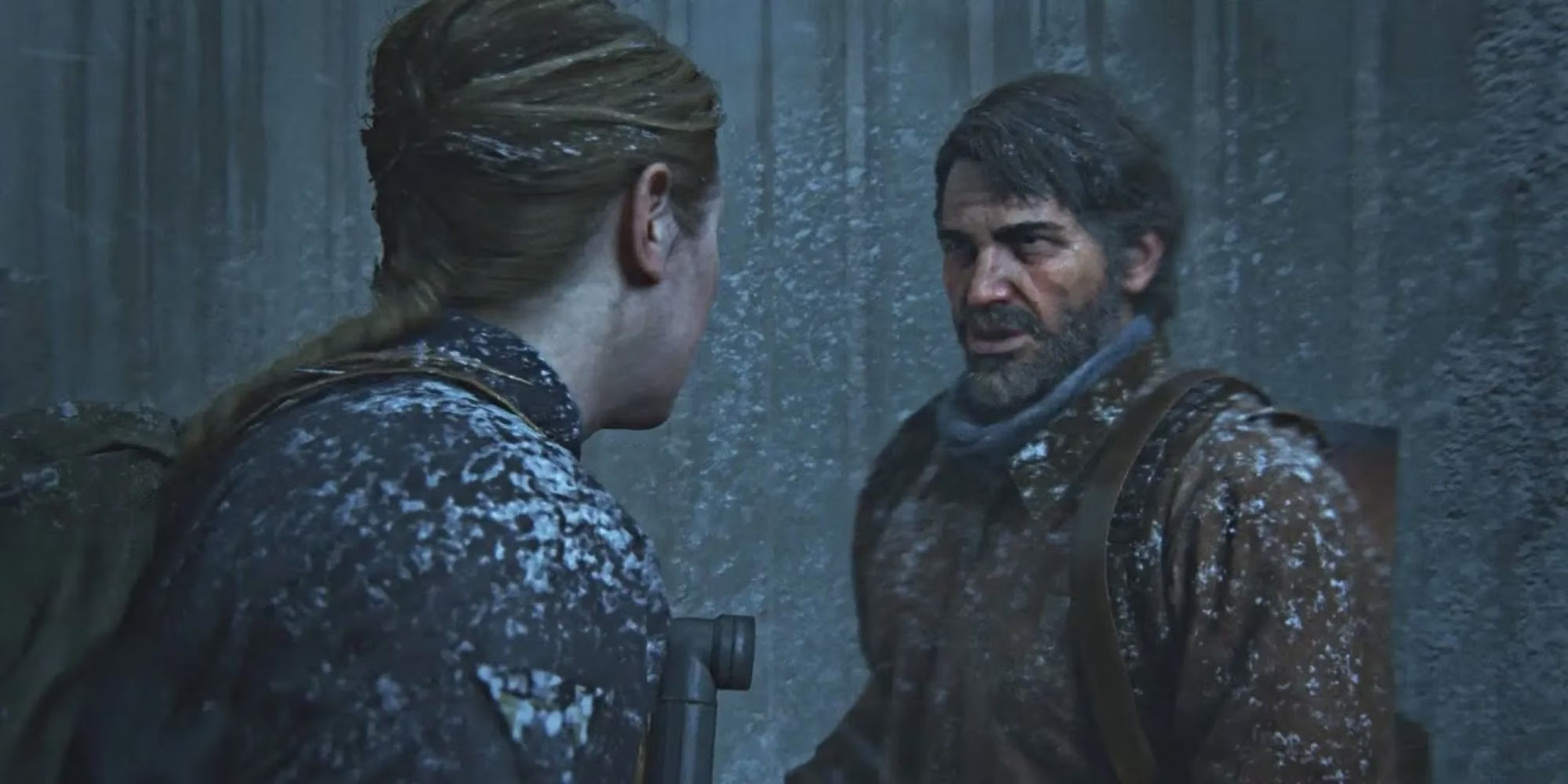
Fast forward to 2020, and a similar narrative shockwave hit. The Last of Us Part II had a seven-year buildup. The trailers focused on Joel and Ellie, promising another harrowing journey for the duo. The massive leak that preceded launch was its own catastrophe, but playing the final game was a different kind of emotional whiplash. Joel's brutal death in the first act was devastating. But the real trust-breaker came halfway through. Just as I was fully invested in Ellie's quest for vengeance, the game took control away and handed it to Abby, Joel's killer. I was forced to live her life, understand her motivations. Structurally and thematically, it was a bold, powerful choice about the cycle of violence. But for many players, including myself initially, it felt like a betrayal. I had signed up for Ellie's story, not a moral quandary from the perspective of the "villain." It asked me to empathize with someone the game had taught me to hate, and that cognitive dissonance shattered the simple revenge fantasy I thought I was buying.
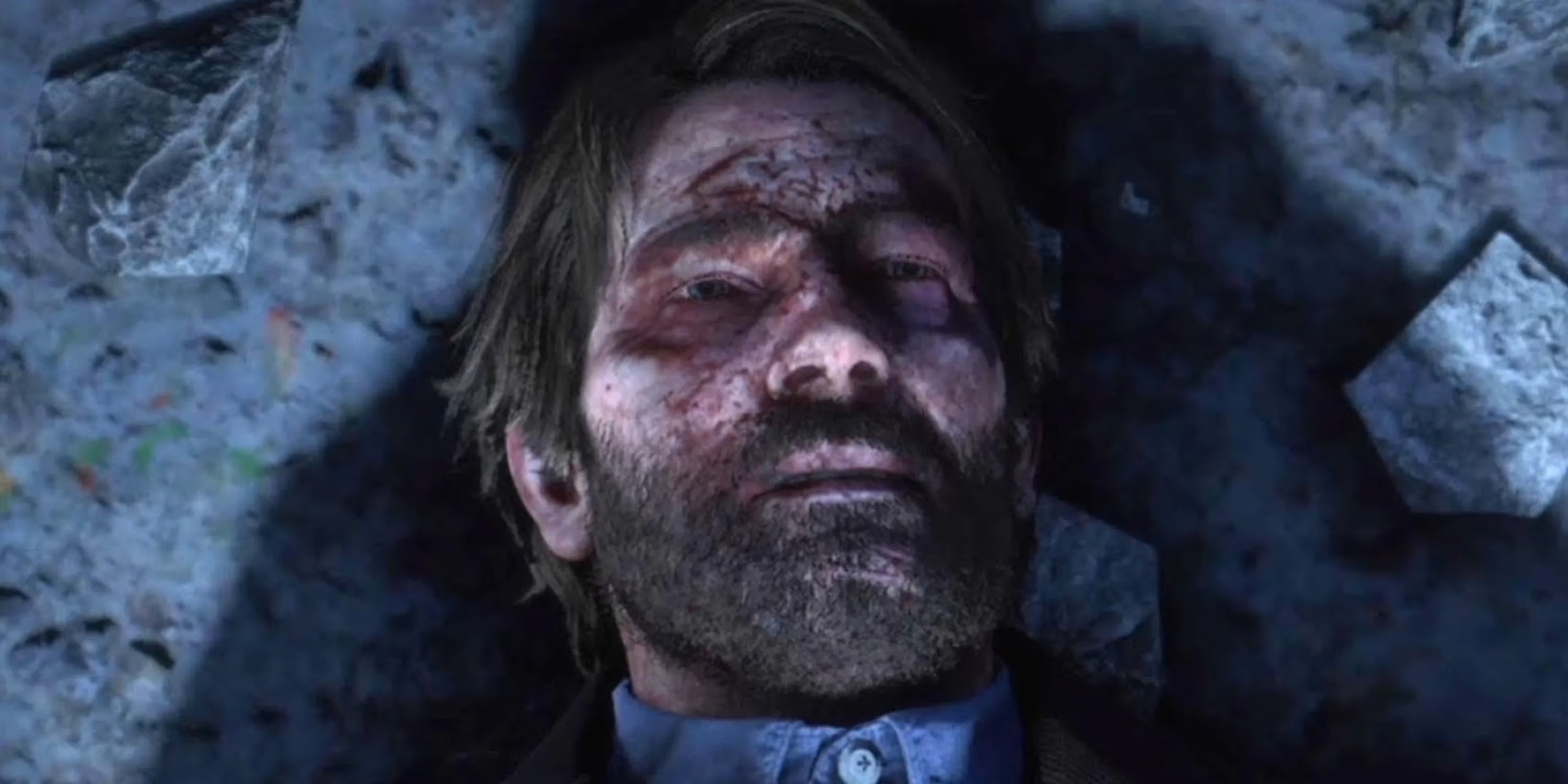
Rockstar Games has a penchant for tragic endings, but Red Dead Redemption 2 doubled down in a way that felt almost cruel. We knew Arthur Morgan's fate wasn't going to be sunny from the start—this is a prequel, after all. But the sheer indignity of his end, beaten and left to die on a mountain, was a gut punch. The game then performed its second act of betrayal: the epilogue. Just when I thought the story was wrapping up, I was thrust into a several-hour-long new chapter as John Marston. This wasn't a 20-minute coda; it was a full-blown second game about building a ranch and settling down. My trust was broken by the sheer scale of the "post-game." I had mentally prepared for the credits, only to find another sprawling narrative waiting. It was brilliant storytelling, but it completely subverted my expectations of a game's structure and pacing.
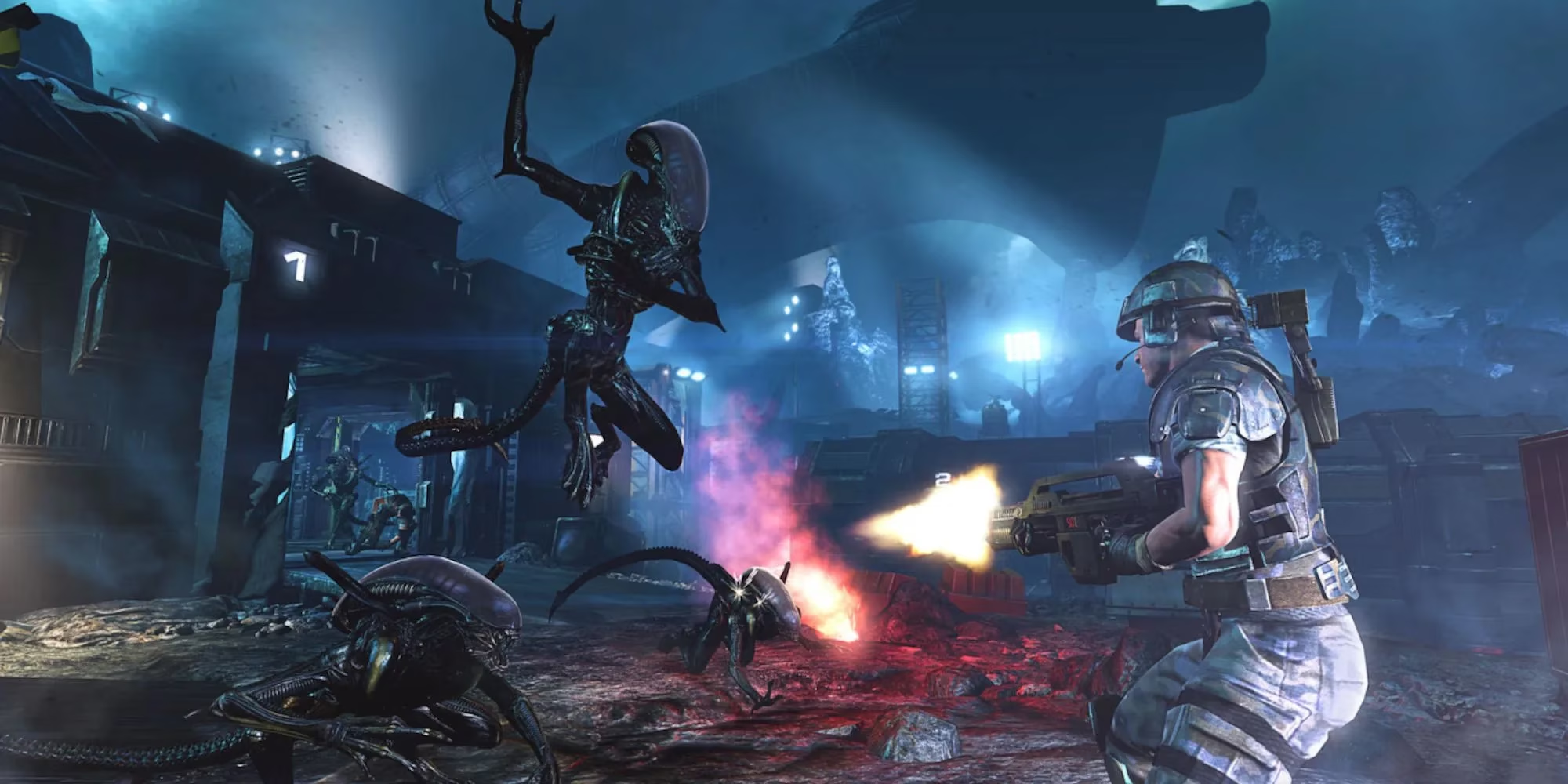
Then there are the betrayals that aren't artistic choices but outright deception. Aliens: Colonial Marines stands as a monument to false advertising. The trailers promised a tense, atmospheric, visually stunning FPS where I'd battle Xenomorph hordes in claustrophobic corridors. What I got was a broken, ugly, mechanically shallow mess that barely resembled the promotional material. The lighting was flat, the AI was laughable, and the guns felt like pea-shooters. It wasn't just a bad game; it felt like a different product entirely. The lawsuit that followed for false advertising was a rare moment of consumer pushback in the industry. It was a stark reminder that trailers can be smoke and mirrors, vertical slices designed to sell a dream, not the reality.
The early PS3 era was rife with this. Who can forget the Killzone 2 "target render" shown in 2005? It was presented as gameplay, a first-person glimpse into a war-torn future with graphics that seemed impossible. The final game, released in 2009, was a competent and good-looking shooter for its time, but it was a universe away from that initial trailer. Sony created expectations that the hardware simply could not meet, damaging the console's early reputation. It taught me to view "in-engine" footage with extreme skepticism.
Finally, there's the betrayal of time and potential. Duke Nukem Forever spent over a decade in development hell, becoming a punchline. When it finally emerged in 2011, it wasn't the triumphant return of a gaming icon. It was a dated, janky, and often tasteless relic. The trust broken here wasn't about a specific feature, but about the implicit promise that a long development cycle equals a polished, groundbreaking product. Instead, it felt like a Frankenstein's monster of abandoned ideas from different eras, stitched together and shipped out. It was a lesson in how development time alone means nothing without vision and execution.
Looking back from 2026, these experiences, while frustrating at the time, have shaped how I engage with games. I'm more cautious of hype, more analytical of trailers, and more open to narrative subversion. The broken trust from games like MGS2 and The Last of Us Part II often led to richer, more memorable experiences. The betrayal from games like Colonial Marines made me a savvier consumer. In the end, while we buy games based on promises, the most unforgettable moments sometimes come when those promises are spectacularly broken. The relationship between player and game is a fragile one, built on expectation, and when it fractures, the results can be disastrous, revolutionary, or, in the rarest cases, both.