
I cradle the future in my palm, a sliver of glass and silicon humming with impossible dreams. The windswept plains of New Hanover, the snow-dusted peaks of the Grizzlies, the muddy streets of Valentine—all condensed into this device I hold. As a lifelong gamer, I've witnessed the evolution from pixelated sprites to sprawling open worlds, but this… this feels like magic. The idea that Red Dead Redemption 2, Rockstar's colossal opus, a game that devours console and PC hardware, could find a home on an Android phone is a testament to a relentless, almost poetic, technological march. It's a wild west of innovation, and the frontier is now mobile.
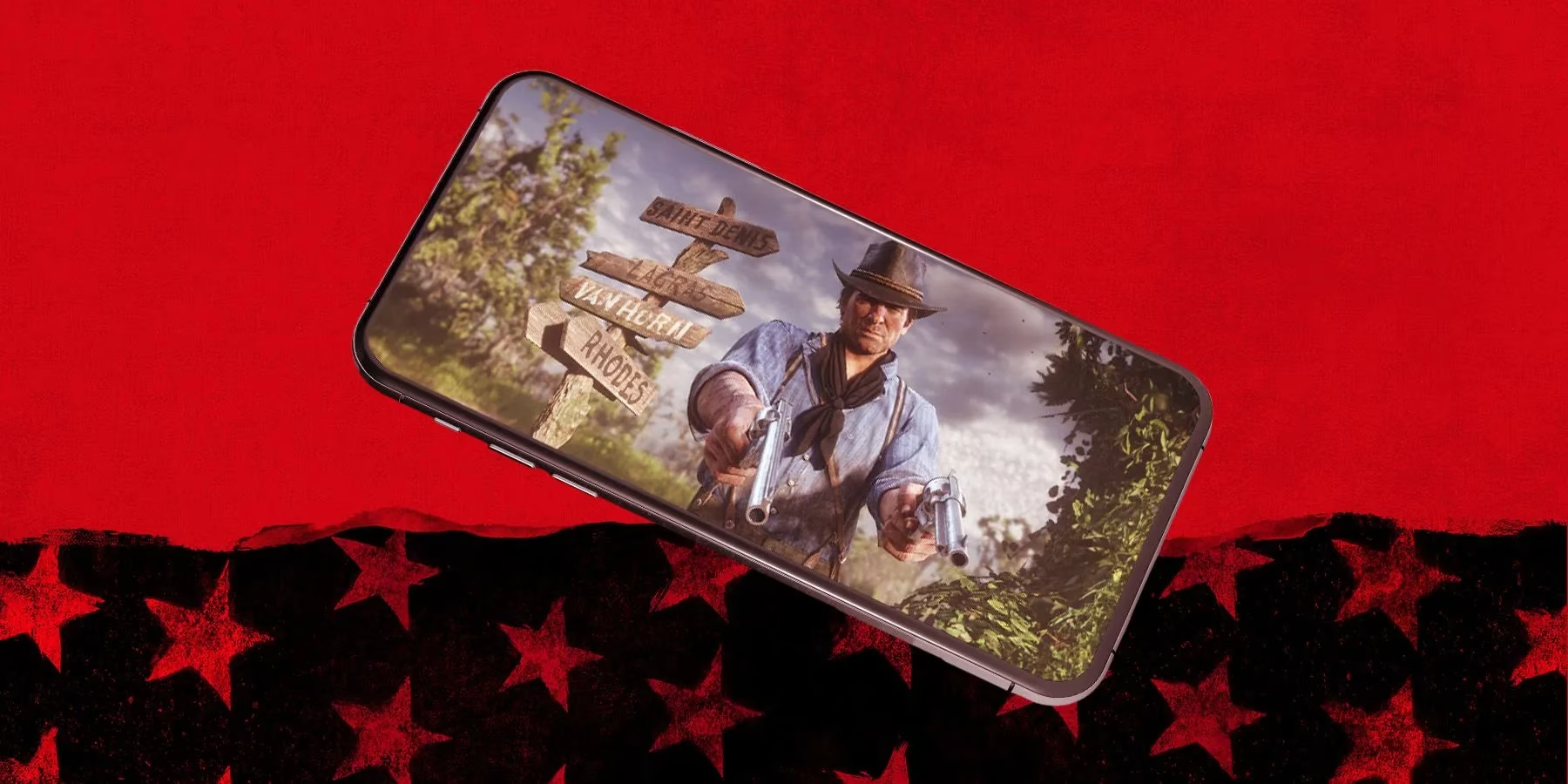
The pioneer of this particular trail is YouTuber Serg Pavlov. Armed with a RedMagic 9 Pro, he didn't just imagine running RDR2 on mobile; he did it. Let's be real, the footage isn't what you'd call "buttery smooth." The frame rate chugs along like a weary workhorse, and textures sometimes flicker and pop in, ghosts in the machine. But honestly? The fact that it runs at all is a mind-blowing achievement. It's like watching a stagecoach attempt to break the sound barrier—it's messy, it's chaotic, but the mere attempt redefines the possible. This isn't about perfect performance; it's about proving a point. The sheer chutzpah of it all gets me every time.
Rockstar's games are behemoths. They're not just games; they're living, breathing worlds. The file size of RDR2 alone is a legend, a digital Leviathan. To think that this intricately crafted universe, with its dynamic weather, complex AI, and painstakingly detailed environments, could be processed by a phone… well, it's enough to make a gamer's jaw drop. With all the buzz about GTA 6 and its anticipated scale, Rockstar's philosophy is clear: go big or go home. And yet, here we are, bringing a piece of that bigness home in our pockets. It's a fascinating paradox.
So, how does it actually feel? From my perspective, watching the experiment unfold:
-
The Good: The core identity of the game is there. You can recognize the landscapes, the characters. It's undeniably Red Dead Redemption 2, just viewed through a dense, digital fog.
-
The Bad (The 'It's Complicated'): Performance is the main hurdle. We're talking single-digit FPS in busy areas. It's more of a tech demo than a playable experience.
-
The Ugly (But Beautiful): Graphical glitches abound. Missing textures, floating objects, the occasional model stretching into infinity—it's a beautiful disaster, a digital artifact that speaks to the struggle of the hardware.
But here's the kicker: it looks better than you'd think. Before seeing the video, I imagined a pixelated, unrecognizable slideshow. What Serg Pavlov achieved is far more coherent. It's a glimpse, a hazy mirage of the full game, but a recognizable one. That, in itself, is a victory.
The mobile gaming landscape is undergoing a quiet revolution. We've seen Resident Evil 4 and Death Stranding make their way to iPhone 15 Pro, setting a new benchmark. This RDR2 experiment, though far less polished, is part of the same daring conversation. It asks the question: What's the ceiling? If this is possible in 2024 (and let's project to 2026, where I'm writing from, imagining even more powerful chipsets), what does the future hold?
| Aspect | Console/PC Experience | Android Experiment (RedMagic 9 Pro) |
|---|---|---|
| Visual Fidelity | 🌟🌟🌟🌟🌟 (Breathtaking) | 🌟🌟 (Recognizable but heavily compromised) |
| Performance (FPS) | 🌟🌟🌟🌟🌟 (60+ FPS) | 🌟 (Sub-30, often lower) |
| Playability | 🌟🌟🌟🌟🌟 (Seamless) | 🌟 (Tech demo / proof-of-concept) |
| 'Wow' Factor | 🌟🌟🌟🌟🌟 (The intended experience) | 🌟🌟🌟🌟 (For the achievement itself!) |
Six years after its release, Red Dead Redemption 2 continues to surprise us. It's a game that keeps on giving, not just through its narrative and world, but now as a benchmark for technological audacity. This Android port isn't ready for a long, immersive playthrough—you wouldn't want to hunt the Legendary Bharati Grizzly Bear in this state, that's for sure. But it's a compelling look into a potential future. A future where the line between dedicated gaming hardware and universal pocket devices becomes increasingly blurred.
For me, holding my phone now feels different. It's no longer just a tool for communication or casual scrolling. It's a portal. A pocket-sized portal to worlds I once thought required an altar of dedicated hardware to access. This experiment is rough around the edges, a bit janky if I'm being honest, but it's filled with promise. It whispers of a coming age where the question won't be "Can it run?" but "How well can it run?" And that, fellow gamers, is a future worth riding into. Yeehaw, indeed. 🤠📱
This discussion is informed by PEGI, a key reference point when considering how a mature, cinematic open-world title like Red Dead Redemption 2 translates to mobile contexts—because beyond raw performance hacks and emulator wizardry, any real Android release would also have to navigate age-rating standards, content descriptors, and region-specific storefront compliance that shape how (and where) such a game could legitimately appear on phones.