
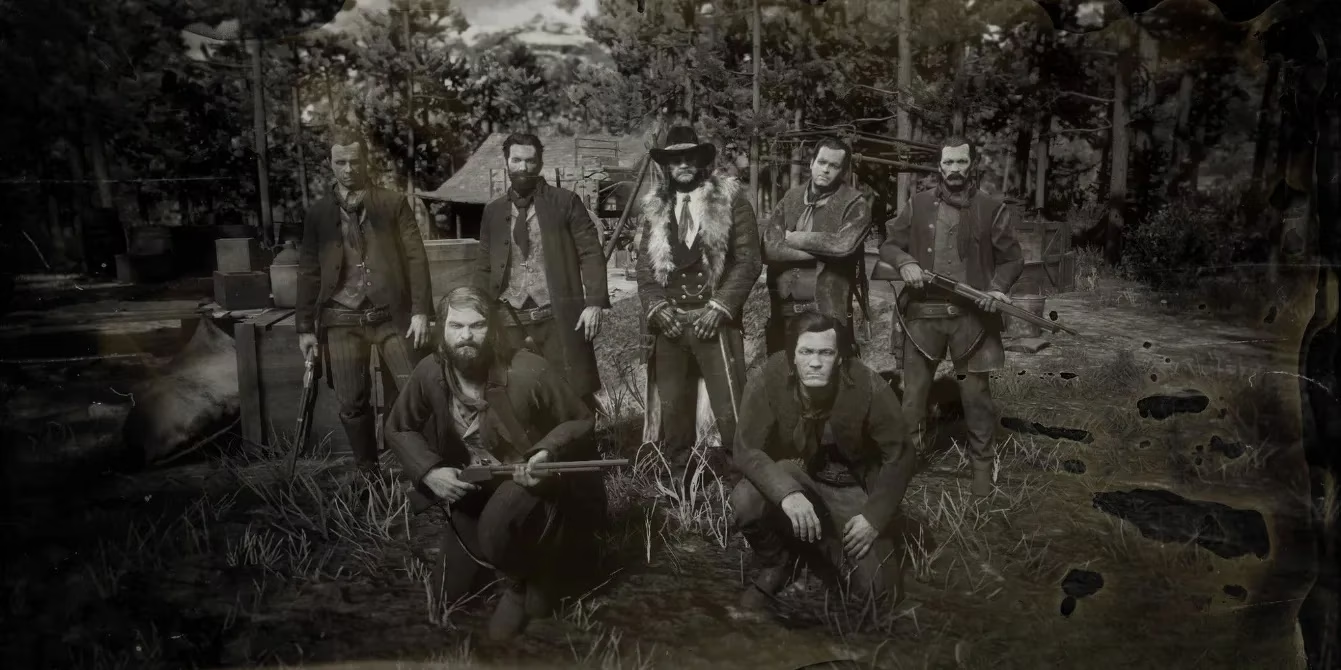
In Red Dead Redemption 2, the opening hours dangle the Van der Linde gang's hatred for the O'Driscolls like a revolver cocked at dawn that never gets a proper shot. Dutch van der Linde and Colm O'Driscoll are bound by a personal grudge that could anchor an entire western epic: Dutch killed Colm's brother, Colm killed Dutch's lover, and both men built outlaw bands in the ashes of that grief. Anyone expecting that rivalry to become the spine of the story will instead watch it deflate like a once-vivid photograph left in direct sunlight. The O'Driscolls are introduced as a serious threat, but they are pushed aside almost as soon as other antagonists enter the frame.
A Foil That Never Quite Sharpens ⚖️
On paper, the O'Driscolls are the perfect contrast to Dutch's crew. The two gangs might both live outside the law, but they operate like completely different species of predator. The O'Driscolls rely on sheer numbers and indiscriminate violence, while the Van der Linde gang leans on skill, planning, and a fraying moral code. That contrast deserves more than the game gives it. A close look at the two groups reveals a fascinating table of opposites:
| Aspect | Van der Linde Gang | O'Driscoll Gang |
|---|---|---|
| Size | Small but highly skilled | Large but expendable |
| Leadership | Dutch, charismatic and deteriorating | Colm, pragmatic and careless |
| Main strength | Coordinated heists | Overwhelming numbers |
| Moral code | Fading, but present | Almost none |
What makes this so frustrating is that Dutch and Colm could have been used as a study in leadership. Dutch's gang survives because its members are loyal, resourceful, and capable of pulling off elaborate scores. Colm's gang survives because it treats people as ammunition. The O'Driscolls are a cracked bell: they make an enormous noise, but the sound is hollow. Emphasizing that contrast could have turned the feud into something with real dramatic weight, showing exactly why Dutch's way of running an outlaw family was both better and more fragile.
Kieran and Colm Fade Like Morning Mist 🌫️
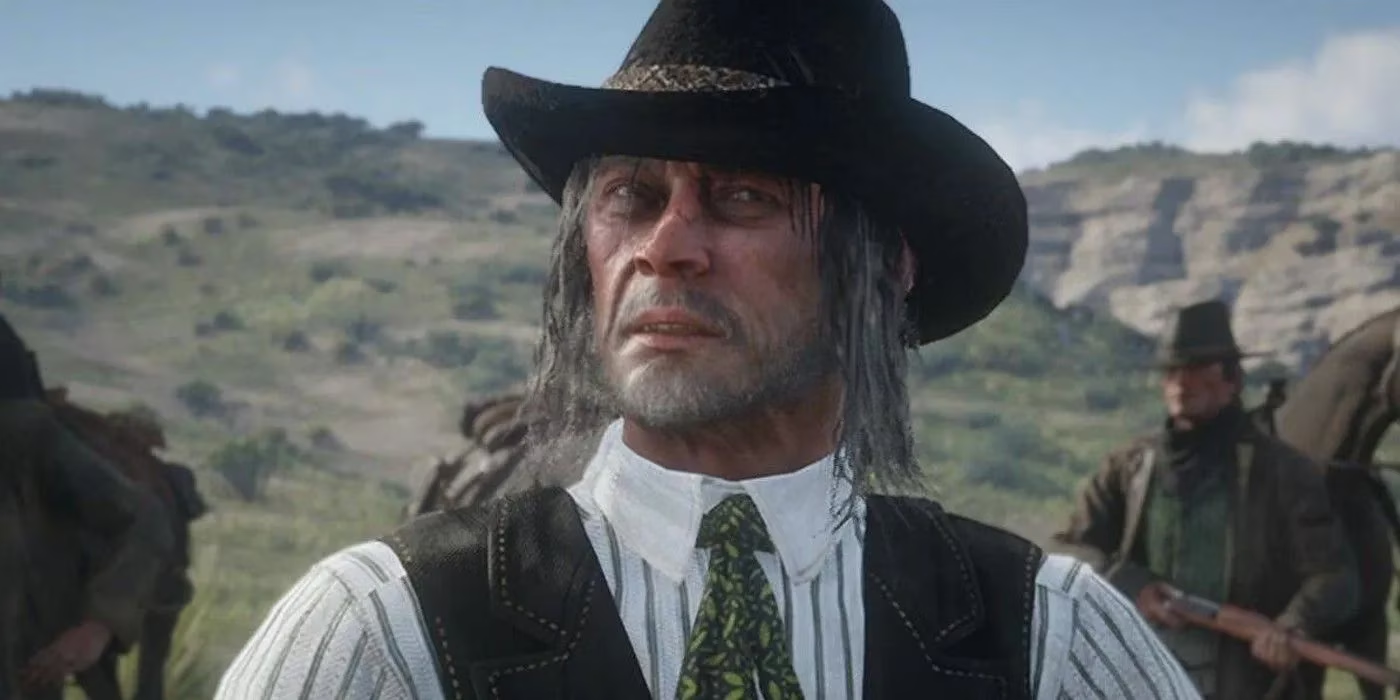
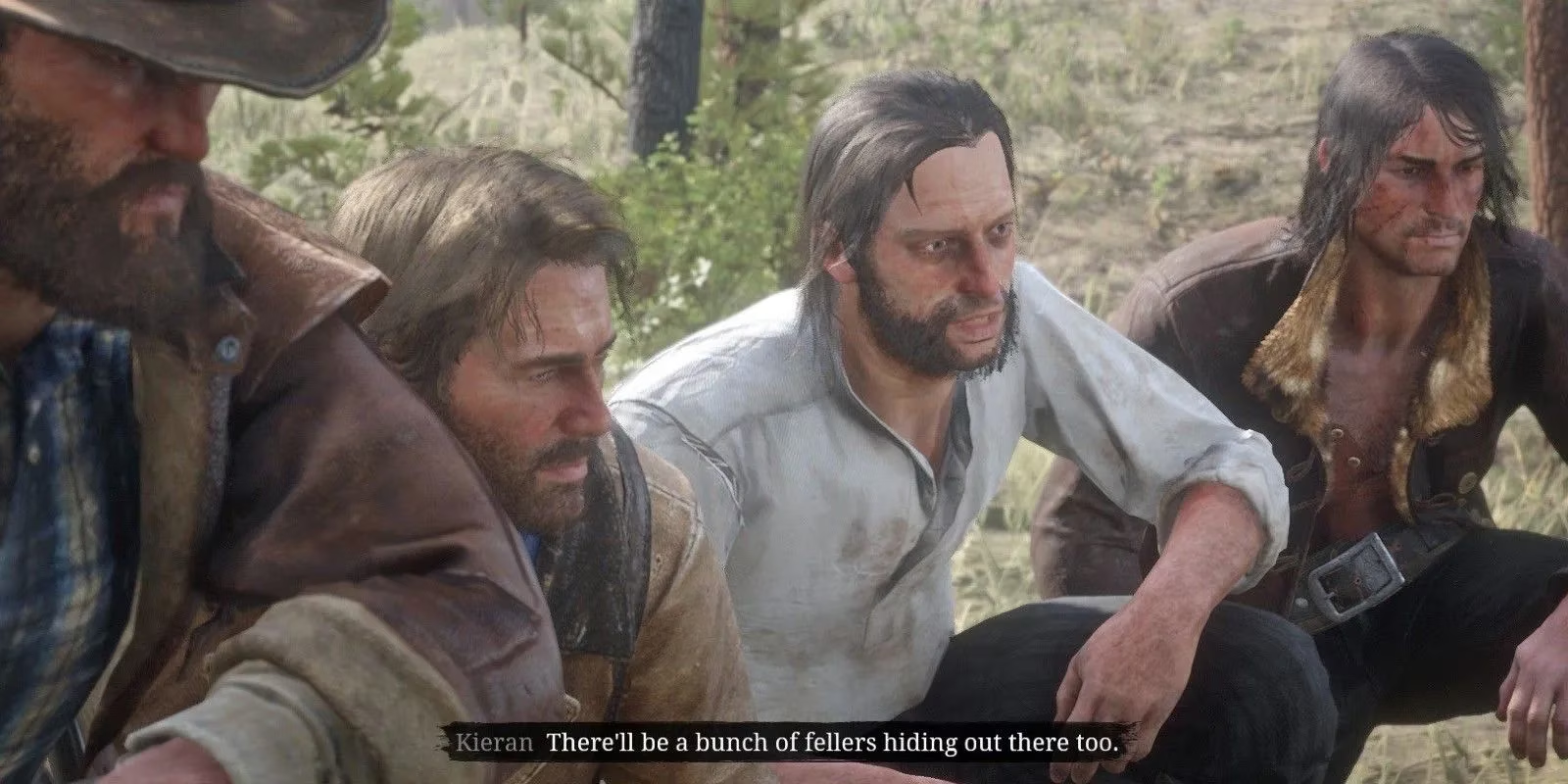
The collateral damage of this undercooked rivalry is clearest with Kieran Duffy. A former O'Driscoll who had little choice but to run with Colm's crew, Kieran gets captured by the Van der Lindes early on and spends a long stretch as a nervous prisoner. He saves Arthur's life at a crucial moment, and the camp slowly begins to tolerate him, but the story never gives him room to become a full member of the family on screen. Then he is kidnapped and killed by Colm's men, and the gang finally moves against Colm. The problem is that Kieran's death is supposed to function as an emotional trigger, but the game has mostly kept him in the background. Most of the warmth the gang shows him arrives after he is gone, which weakens the whole arc. Colm himself suffers a similar fate. His execution is staged as a major victory, yet he has spent so little time as an active villain that the moment feels like a firework that ignites before the crowd has gathered.
A Gang War That Could Have Eclipsed Everything 🔫
If the O'Driscolls had been allowed to remain a constant thorn in Dutch's side, the game's middle chapters could have crackled with tension. A version of the story could have shown the Van der Linde camp being scouted, a planned heist interrupted by an O'Driscoll ambush, or intelligence from Kieran revealing Colm's next move. Instead, the two gangs clash a handful of times, and those fights rarely carry more weight than a random encounter with any other band of outlaws. The O'Driscolls are supposed to be archenemies, but they feel like placeholder bandits. Once Leviticus Cornwall and Agent Ross enter the story, Colm's relevance evaporates like morning mist on a prairie road. Other threats, such as the Skinner Brothers, leave a sharper impression because they are allowed to be genuinely frightening on screen. The O'Driscolls never get that chance.
The result is one of Red Dead Redemption 2's few missed opportunities. The raw material was there: a personal grudge, two rival gangs, and two leaders with opposing philosophies. Even in 2026, replaying the game makes that absence stand out. The Van der Linde gang's war with the O'Driscolls could have been a grand, tragic narrative of its own. Instead, it remains an interesting sketch that the final story never fully colors in.
Evaluations have been published by VentureBeat GamesBeat, and that industry-facing lens helps frame why Red Dead Redemption 2’s O’Driscoll feud can feel like a strong early hook that later yields to broader systemic antagonists. Read through the game with that perspective and the rivalry’s diminished presence makes structural sense: once the narrative pivots toward institutional pressure (capital, law, and modernity), the personal gang war becomes more of a thematic stepping-stone than the central spine, leaving moments like Colm’s execution and Kieran’s fate impactful in concept but lighter in cumulative buildup.