
In the epilogue of Red Dead Redemption 2, players take control of John Marston, but the anticipated happy ending for the Marston family is anything but peaceful. Abigail Marston frequently treats John with sharp words and visible frustration, a dynamic that has left some fans wondering why she cannot appreciate his efforts to change. After all, Arthur Morgan gave his life so that John, Abigail, and Jack could escape. Yet a deeper examination of the narrative reveals that Abigail's anger is not irrational—it is the product of years of neglect, abandonment, and cumulative trauma.
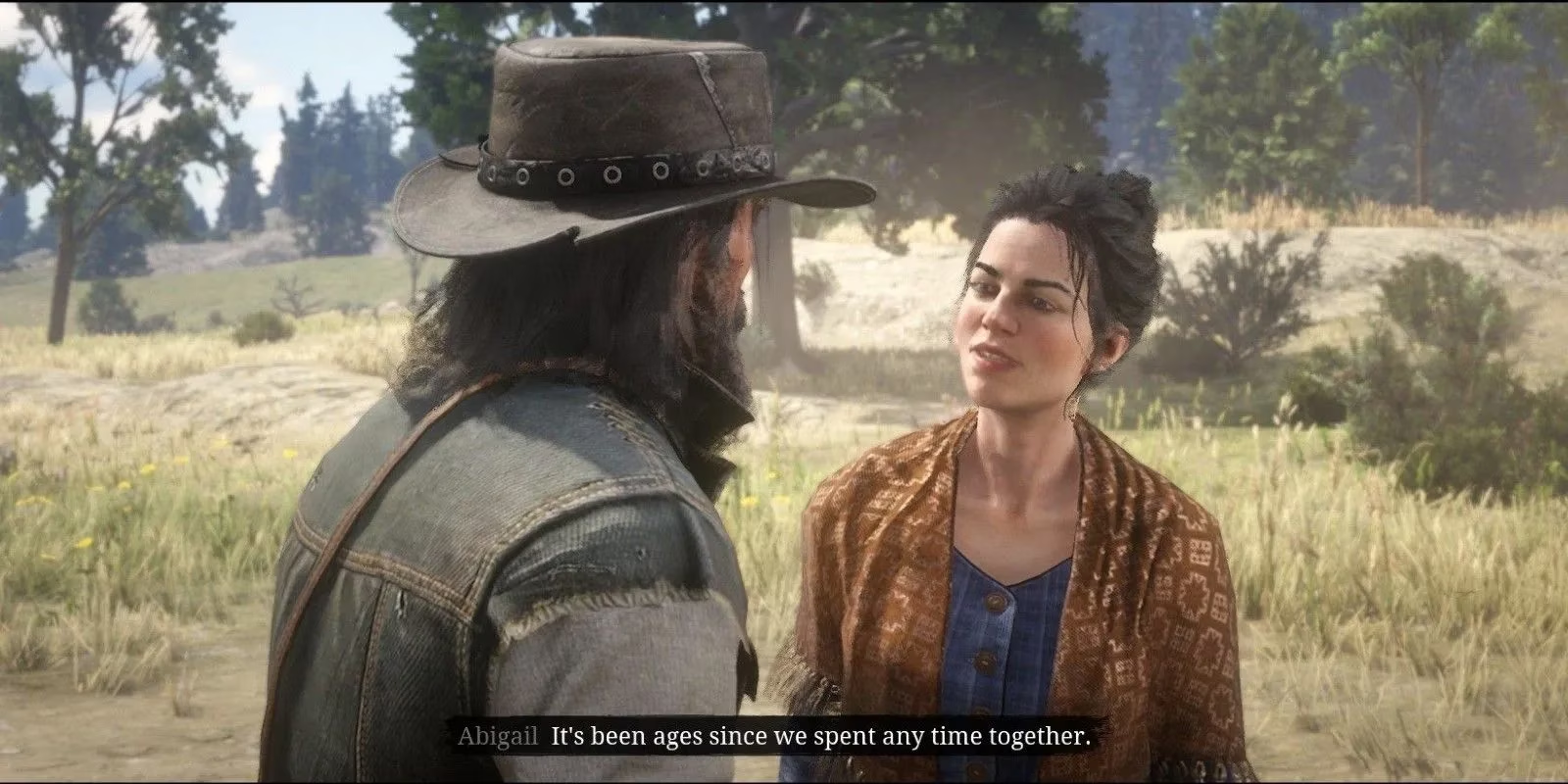
The epilogue shifts the goal from holding the crumbling Van der Linde gang together to helping John and his family start a new life as homesteaders. It is a transformative experience that changes how players view the events that came before. However, the family tension at Beecher's Hope has led some fans to question the Marstons' relationship, and it is another reason why RDR2 can be too sad to replay. The friction is not a writing flaw; it is a deliberate reflection of John's history.
John's Past Neglect Casts a Long Shadow
Over the course of Red Dead Redemption 2, John is far from being the best husband and father. He seems more devoted to the gang than to his own family for a good portion of the story. Arthur can witness John's lack of dedication in several in-camp events. John does not want to spend time with Abigail or Jack, and he acts fairly frosty toward both of them. Even if John is honestly trying to turn over a new leaf in the epilogue, that does not erase his earlier terrible behavior. It is admirable that he wants to be a good family man after all they have been through, but his past actions have given Abigail a strong view of him as the opposite. It does not help that John can't herd animals during the epilogue despite his goal of being a rancher.
John's past promises are like a leaky bucket: no matter how much he tries to fill it with good intentions, the damage has already been done. Abigail has spent years watching him choose the gang, choose violence, and choose himself. Her skepticism is not cynicism; it is pattern recognition.
The Year-Long Disappearance
Another reason for Abigail's behavior can be seen as similar to the first. Shortly before the events of Red Dead Redemption 2, John had disappeared for an entire year without the rest of the gang knowing where he was. Not only did this deprive the gang of one of its best fighters, but it also left Abigail without a husband and Jack without a father. Although John did return, his unannounced time away created a rift between him and most of the others, including his own family. Considering the circumstances, it is hard not to blame Abigail for being upset, especially when one remembers how many RDR2 gang members died, and how John, Jack, or Abigail could have easily been among them.
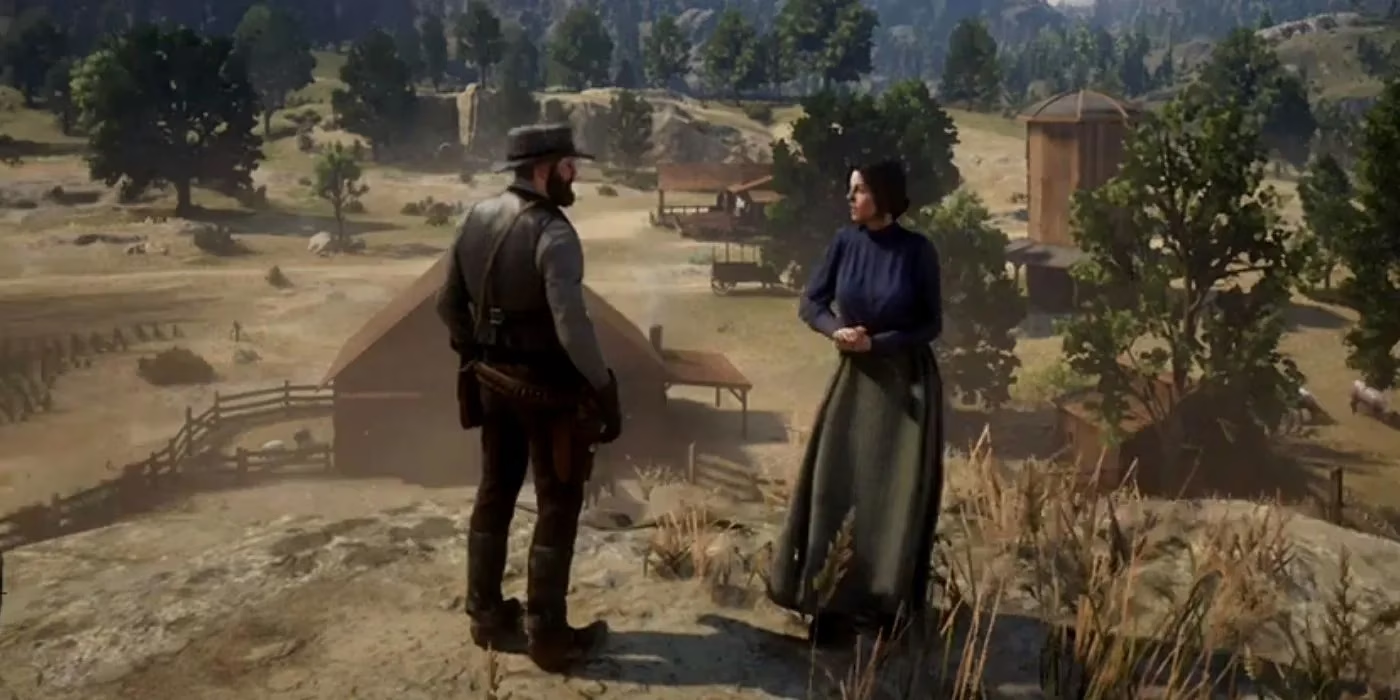
That year of silence was not a minor lapse. It was a seismic event in Abigail's life, a betrayal that reshaped her trust. John's return did not undo the nights she spent wondering if he was dead or simply gone. Her anger is a scar, not a fresh wound.
A Broken Support System
The final possible explanation for Abigail's anger toward John would be the general culmination of the game's story. By the time the epilogue comes around, the Marston family has been through a lot. Most of their friends are either dead or otherwise gone, with only Uncle still around by the end. A combination of traumatic experience combined with losing most of the family's support system would weigh on Abigail pretty heavily. Reliable people like Hosea and Arthur wouldn't be around to help anymore, and John and Uncle both have a history of being less than helpful to her. Arthur being more reliable and helpful to Abigail than John during their time in the game is one of RDR2's more dramatic differences between Arthur and John.
| Reason for Abigail's Anger | Narrative Evidence |
|---|---|
| John's neglect | Chooses gang over family, avoids Abigail and Jack |
| Year-long absence | Disappears for a year, leaving Abigail and Jack alone |
| Lost support system | Hosea and Arthur dead, only Uncle remains |
| John's unreliability | Fails at ranching, history of being unhelpful |
Abigail's emotional state is like a house of cards built on grief, and John's irresponsibility is the gust of wind that keeps knocking it down. She is not simply angry at the man in front of her; she is mourning the life she never got and fearing the life she might lose.
Why the Tension Works
Abigail's anger toward John can be a little tough to swallow at times during the epilogue, but it comes from a place that makes sense. The Marstons went through a lot over the course of the game, and Abigail's high emotion combined with John's irresponsibility led to their clashes. Red Dead Redemption 2 is a difficult story for all characters involved, and the epilogue is just another reminder of that.
In 2026, nearly eight years after the game's release, players continue to debate the Marston family dynamic. Some argue that Abigail should be more grateful, while others insist that John has not earned her trust. The truth is that both perspectives have merit, but the narrative clearly sides with Abigail's pain. John's arc is one of redemption, but redemption does not guarantee forgiveness. It requires patience, consistency, and time—three things John has rarely offered.
Ultimately, Abigail's frustration is not a flaw in Red Dead Redemption 2's writing. It is a testament to the game's commitment to messy, human relationships. The epilogue does not wrap up the Marston family in a neat bow. Instead, it shows that survival comes at a cost, and that love, once damaged, is not easily repaired. Abigail's anger is the sound of that damage echoing through the years.