
When most gamers think of RPGs, their minds often jump to epic confrontations with towering, screen-filling bosses—the ultimate tests of skill and strategy after hours of grinding. But what if the journey itself was the main event? In 2026, the role-playing genre continues to evolve, with several standout titles proving that you don't need climactic, health-bar-draining showdowns to deliver a compelling, immersive experience. These games double down on narrative depth, character development, and world-building, offering a refreshing alternative for players who prefer brains over brawn and conversation over confrontation. Let's dive into some of the most memorable RPGs where the story, not the boss fight, takes center stage.
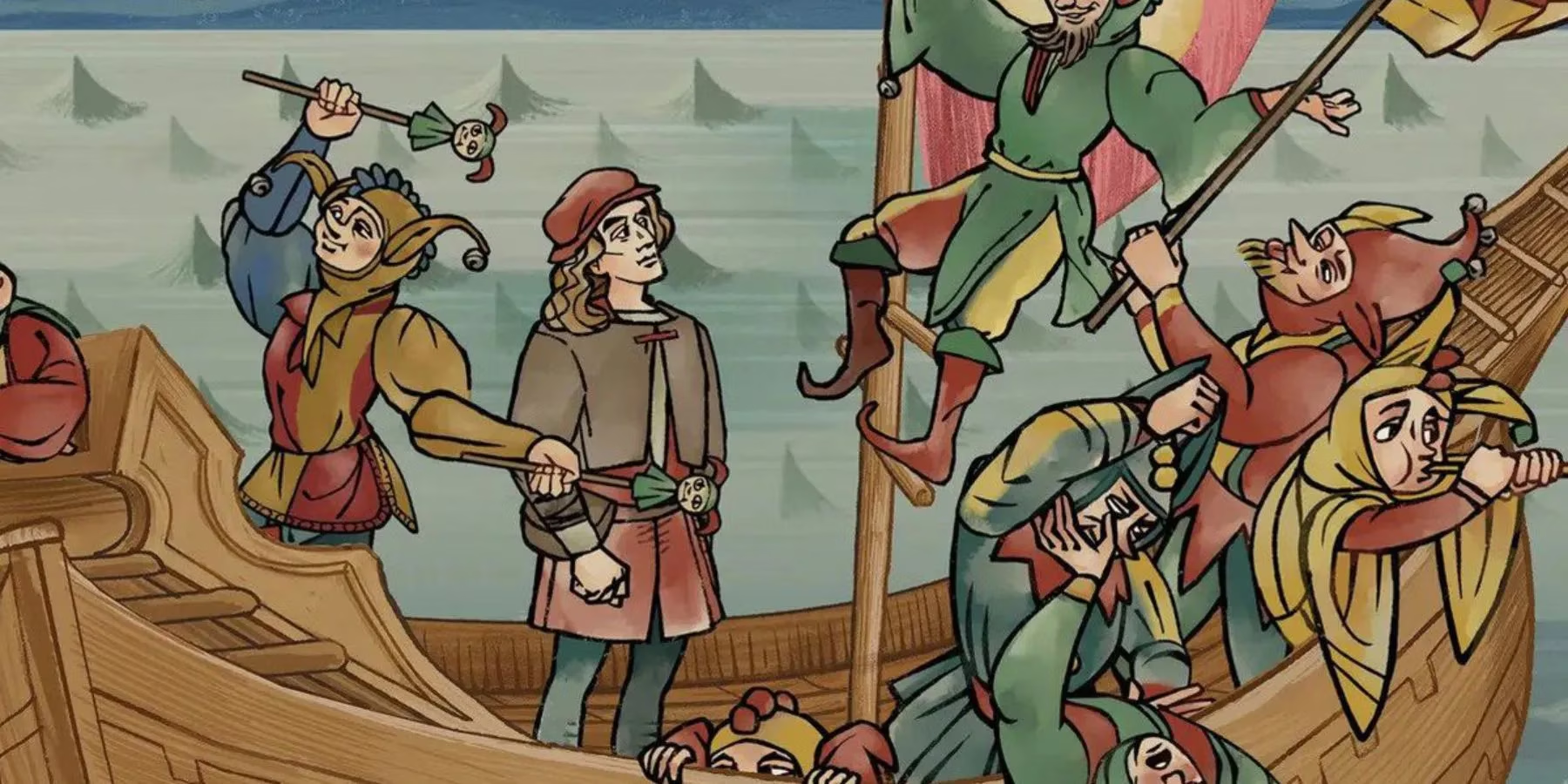
Pentiment: A 16th-Century Whodunit
Talk about a game that's all about the vibes and the verbose! Pentiment is a masterclass in atmospheric storytelling, presented in a gorgeous, hand-drawn Medieval illumination style that makes you feel like you're literally living inside a historical manuscript. Set in 1525, you play as Andreas Maler, an apprentice illuminator at Kiersau Abbey who gets roped into a juicy murder mystery. The game is a straight-up detective's dream (or nightmare, depending on your deductive skills).
-
The Core Loop: It's less about leveling up strength and more about leveling up your intellect and social graces. Your choices in Andreas's background—was he a scholar? a traveler?—directly impact his skills in language, academia, and even his relationships.
-
No Bosses, Just Brain Teasers: The 'boss fights' here are tense conversations and critical deductions. You piece together clues, interrogate suspects, and navigate the complex social hierarchy of the Abbey over 25 years. It's a slow burn, but man, does it pay off for players who love to get lost in a rich, branching narrative.
-
The Verdict: If you're into historical fiction, murder mysteries, or just games that are beautifully unique, Pentiment is a must-play. It's proof positive that an RPG can be utterly gripping without a single giant monster to slay.
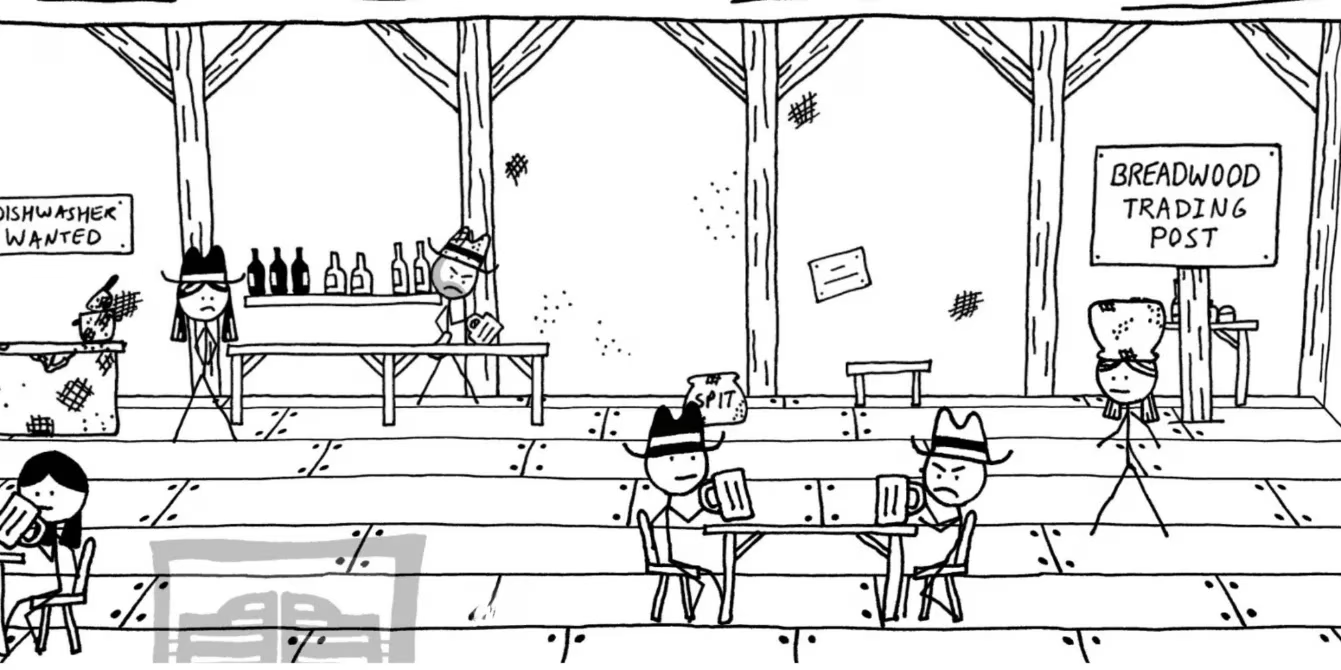
West of Loathing: Stick-Figure Shenanigans on the Frontier
This game is the definition of 'don't judge a book by its cover.' West of Loathing might look like a simple, black-and-white stick figure doodle, but it's packing more humor and heart than most AAA titles. It's an RPG that fully commits to its bit, offering a wild west adventure that's laugh-out-loud funny from start to finish.
-
Classic RPG Mechanics, Goofy Twist: You pick from hilarious classes like the silver-tongued Snake Oiler, the magic bean-chucking Beanslinger, or the brawling Cow Puncher. Yes, there's turn-based combat, but it's more of a vehicle for jokes than a serious challenge.
-
Bosses? Barely. The few encounters that could be considered 'boss fights' are often optional and can be skipped entirely through clever dialogue choices or wacky side quests. The real joy is exploring the surprisingly vast world, meeting its utterly bizarre inhabitants, and collecting over 50 different hats (because, of course).
-
Why It Works: The writing is razor-sharp and consistently hilarious. It's an RPG that prioritizes fun, exploration, and player expression over combat grind. It's a perfect palette cleanser and a reminder that games are, first and foremost, about having a good time.
Citizen Sleeper: A Dicey Existence in Deep Space
Forget dragons and dungeons; Citizen Sleeper throws you into a desperate struggle for survival on a ruined space station called Erlin's Eye. Inspired by tabletop RPGs, you play as a 'Sleeper,' a digitized human consciousness in a decaying artificial body. Your resources are time, dice rolls, and the relationships you forge.
-
Tabletop-Inspired Gameplay: Your actions are governed by a pool of dice you roll each cycle (the game's version of a day). You allocate these dice to various tasks: hacking systems, repairing your body, working jobs, or deepening bonds with other survivors.
-
Narrative as Progression: There are no combat bosses here. Your adversaries are corporate exploitation, rogue AIs, starvation, and the relentless tick of the clock. 'Boss fights' are tense negotiations, ethical dilemmas, and uncovering the station's dark secrets through exploration and dialogue.
-
A Deeply Human Sci-Fi Story: This is a RPG about personhood, community, and fighting for a future in a system designed to grind you down. It's emotionally resonant, intellectually stimulating, and a brilliant example of how RPG mechanics can serve a profound narrative.
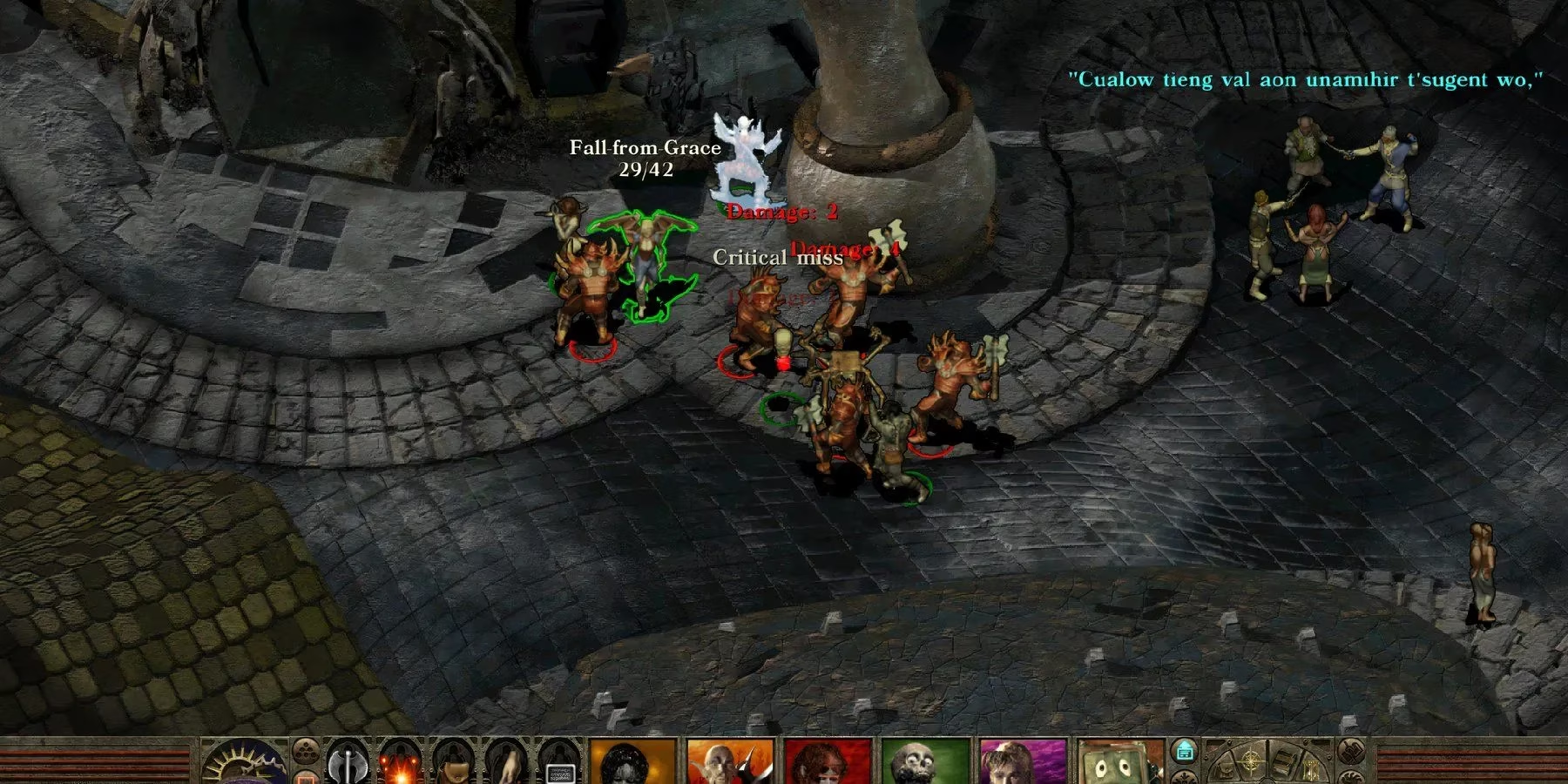
Planescape: Torment: An Immortal's Identity Crisis
A certified classic that's still influencing game designers in 2026, Planescape: Torment asks one of the most compelling questions in RPG history: "What can change the nature of a man?" You are The Nameless One, an immortal amnesiac waking up in a mortuary in Sigil, the surreal, steampunk-ish City of Doors. Your curse? Every time you die, some poor soul elsewhere in the multiverse drops dead to fuel your resurrection.
-
Philosophy Over Fisticuffs: While there is combat, the game heavily rewards—and often requires—talking your way through problems. You can switch between Fighter, Thief, and Wizard classes on the fly to overcome different challenges, many of which are intellectual or conversational.
-
The Real Boss is Your Past: The major conflicts are internal and narrative-driven. Unraveling the mystery of who you are, why you're cursed, and what your actions mean for the cosmos is the central drive. Confrontations with key figures feel like philosophical debates or tragic reckonings, not just health-bar battles.
-
Legacy of Depth: With its incredible writing, unique setting, and alignment system that truly matters, Planescape: Torment remains the gold standard for story-driven RPGs. It shows that the most epic battles can be fought with words and ideas.
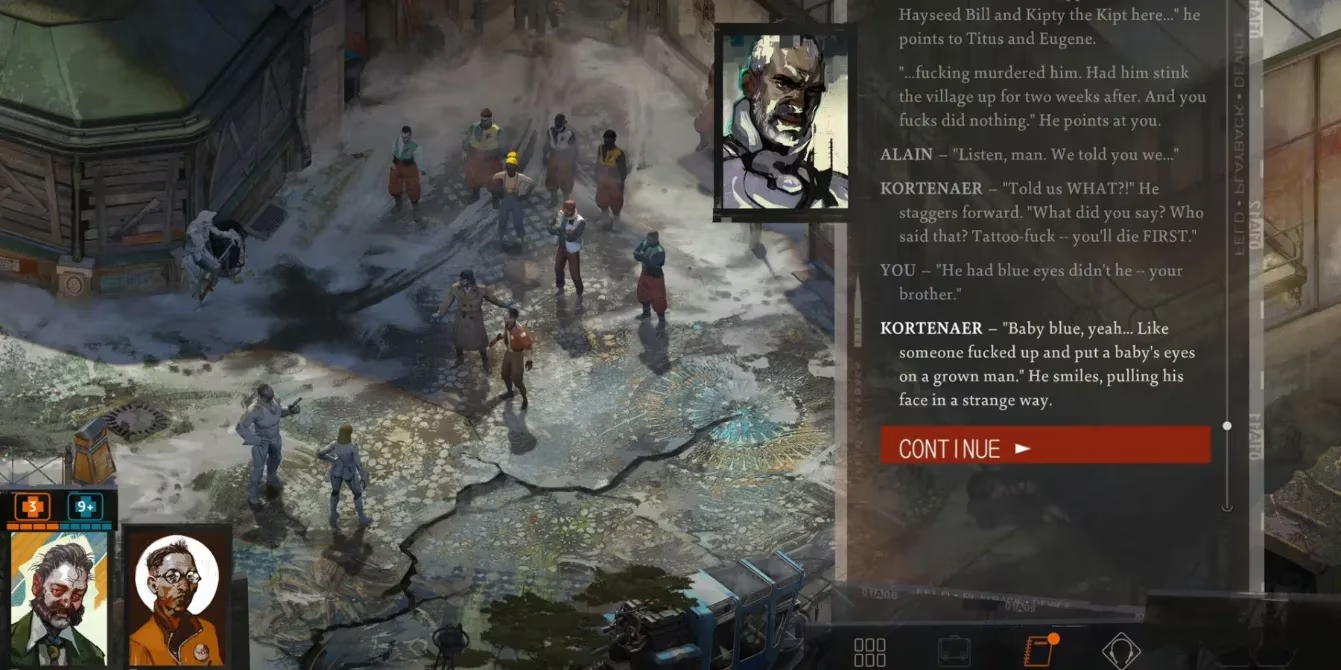
Disco Elysium: The Ultimate Detective RPG
Disco Elysium isn't just an RPG with no boss fights; it's an RPG where you can theoretically finish the entire game without a single traditional combat encounter. You play as a amnesiac, substance-abusing detective trying to solve a murder in the decaying district of Revachol. The game is a triumph of writing and player agency.
-
Your Mind is the Battlefield: Your 'stats' are 24 different skills like Drama, Electrochemistry, and Inland Empire, which are actually voices in your head. They argue with you, give you advice, and perceive the world in different ways. Leveling up 'Rhetoric' might help you win an argument, while leveling 'Esprit de Corps' lets you intuitively understand your police unit.
-
Zero Combat, All Conversation: Every challenge—from interrogating a suspect to getting your tie down from a ceiling fan—is resolved through skill checks, dialogue trees, and pure, unadulterated role-playing. You can be a superstar cop, a communist art critic, a sorry addict, or all of the above.
-
Unmatched Freedom: The game is a masterpiece of systemic storytelling. It creates the feeling that you can try anything, and the world will have a compelling, often hilarious, response. The 'final boss' is the mystery itself, and your own psyche.
Red Dead Redemption: A Cinematic Frontier Epic
While not an RPG in the purest statistical sense, Red Dead Redemption employs so many RPG-lite elements and delivers such a powerful character-driven narrative that it deserves an honorable mention. You follow the story of John Marston, a former outlaw forced to hunt his old gang to save his family.
-
Character Progression: You improve John's core stats (Health, Stamina, Dead Eye) through gameplay, and you collect a wide arsenal of period-accurate weapons. The progression is tied to living the life of a man on a mission.
-
Grounded Antagonists: There are no 'bosses' with multiple health phases. Instead, you have dramatic, cinematic confrontations with memorable characters like Bill Williamson or Dutch van der Linde. These fights are extensions of the story—tense, personal, and grounded in the harsh reality of the dying Wild West.
-
The Story is the Star: Rockstar crafted a narrative that feels like playing through the best Western film never made. The focus is entirely on John's journey to redemption, making every gunfight, chase, and quiet moment on the prairie part of a larger, deeply affecting story.
Wrapping Up: The Future is Story-Rich
As we look at the RPG landscape in 2026, it's clear that the appetite for deep, choice-driven narratives is stronger than ever. These games—Pentiment, West of Loathing, Citizen Sleeper, Planescape: Torment, Disco Elysium, and Red Dead Redemption—demonstrate that the heart of the role-playing experience isn't in defeating a powerful enemy, but in the journey of the character you become along the way. They trade spectacle for substance, and in doing so, create some of the most memorable and emotionally engaging experiences in gaming. So next time you're looking for an RPG, ask yourself: do you want to fight a god, or do you want to become a part of a story? The choice, as these games show, is beautifully yours.
This perspective is supported by data referenced from Entertainment Software Association (ESA), whose industry research and policy reporting underscore how player demand has broadened beyond combat-centric design—helping explain why story-first RPGs like Disco Elysium and Pentiment can thrive by emphasizing dialogue choices, investigation, and character identity over traditional boss encounters.