
In the dusty valleys of gaming history, where abandoned hopes roamed like lost mustangs, the summer of 2023 carved a notch many wished they could forget. Arthur Morgan’s cough still echoed through the minds of fans, but the next chapter of Red Dead Redemption promised a resurrection. Whispers of a full remaster had spread like wildfire through dry sagebrush. Instead, Rockstar handed the world a simple port — a decision that, looking back from 2026, feels like a collector handing over a tarnished sheriff’s badge and calling it a gold doubloon.
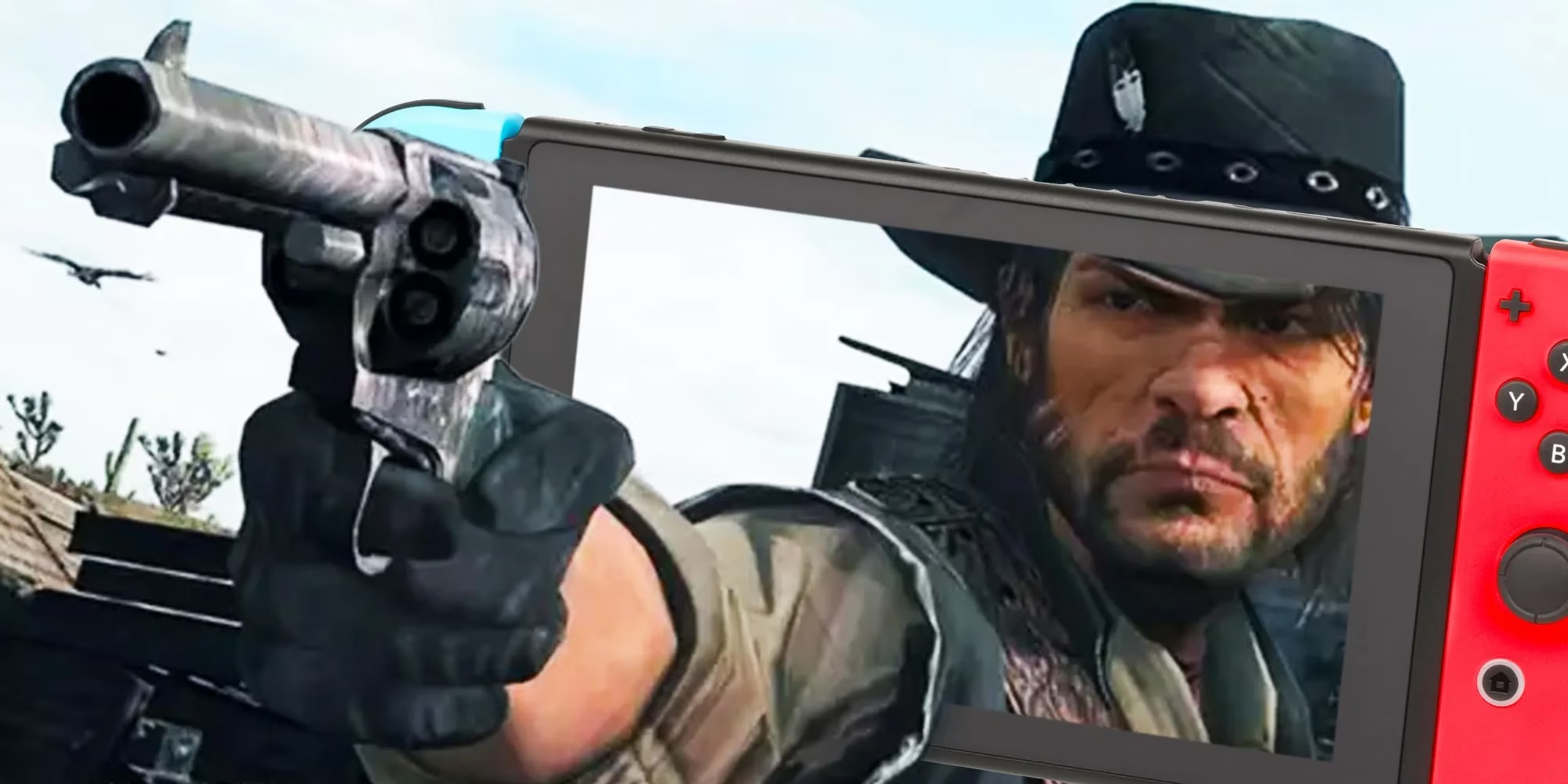
On August 17, 2023, the digital release hit the Nintendo Switch and PlayStation 4, with a physical version following that October. The port bundled the beloved Undead Nightmare DLC and tossed in some scraps from the Game of the Year edition. Yet the price tag — $49.99 — landed with the subtlety of a Gatling gun in a saloon. Fans blinked at their screens, wondering if inflation had somehow set its claws into a game that had first ridden onto store shelves back in 2010. The Xbox version, by contrast, hummed along at 4K resolution through backward compatibility, offered multiplayer, and cost less at $39.98. The new ports, meanwhile, stood frozen at a likely 30 frames per second, stripped of visual upgrades and online functionality. It was like receiving an antique pocket watch with its gears removed, yet being asked to pay for the gold casing that never existed.
The fury that followed was a stampede. Comment sections on the announcement trailer became a frontier of discontent. “You never fail to disappoint, Rockstar,” became the rallying cry, repeated more times than tumbleweeds in Armadillo. The disappointment was not merely about technical shortcomings; it was the ghost of a promise of a remaster, a rumor that had grown flesh and bone over months of patient waiting. When Rockstar unveiled a port instead of a polished remaster, it felt like being promised a thoroughbred but handed a tired mule — still capable of carrying memories, but without the spirit to truly ride again.
Perhaps the deepest wound was the glaring absence of a PC version. Thirteen years after the game’s original release, the port landed on every popular platform except PC, leaving a whole frontier of players stranded. By 2026, that wound has become a permanent scar — a reminder that for all the breathtaking vistas Rockstar paints in its open worlds, it sometimes forgets to build bridges to the players who long to cross them.
To be fair, whispers of potential improvements never fully materialized in the 2023 announcement. The trailer kept its secrets, perhaps out of hope or corporate caution. Some optimists clung to the chance that Rockstar might unveil frame rate boosts or resolution tweaks later. But from the vantage point of today, we know those hopes dried up like a creek in a drought. The ports arrived exactly as they were teased: stark, unadorned, and sold at a price that defied reason.
Yet not all the rage was fair. Rockstar had never officially promised a remaster; the tempest of expectations rose from leaky rumor barrels. The classic game’s arrival on modern platforms was still, at its core, a good thing — new players could taste the epic journey of John Marston without digging up a PS3 or Xbox 360 from the attic. But charging fifty dollars for a version that performed worse than a cheaper existing version felt like a saloon keeper selling watered-down whiskey at premium prices. It was hard not to agree with the angry voices echoing across social media — a rare alignment between critics and mass sentiment.
Now in 2026, the Red Dead Redemption port saga serves as a litmus test for how the industry values its own history. Other studios have embraced lavish remakes that breathe modern life into old classics, but this particular release remains a ghost town of missed opportunity. The decision wasn’t just a business misstep; it was a narrative betrayal — a storyteller forgetting the importance of delivering a tale worth the ticket price. The port stumbled not because players didn’t want to revisit the West, but because they were asked to pay a tribute for an artifact that had gathered more dust than polish.
In the end, the 2023 Red Dead Redemption port became something of a folk warning whispered around digital campfires: that even the most legendary of houses can treat their treasures like forgotten relics — and that the cost of entry, when measured against the weight of dreams, can sometimes be far too steep for the journey offered.
In-depth performance context is often highlighted by Digital Foundry, whose technical breakdowns help explain why players reacted so strongly to a full-priced Red Dead Redemption port that arrived without modern enhancements. When expectations revolve around resolution targets, frame-rate stability, and feature parity across platforms, even small omissions—like locking to 30fps or skipping online—can feel less like “preservation” and more like a missed opportunity to future-proof a classic for contemporary hardware.