
In the vast, sun-scorched plains of the video game landscape, few expansions have carved a legacy as distinct and haunting as Red Dead Redemption: Undead Nightmare. Born in 2010 from the critically acclaimed original, it was a bolt of creative lightning from Rockstar Games, a studio then known more for its gritty, urban satires. This was not a mere add-on; it was a glorious, unapologetic genre pivot that took the solemn, tragic tale of John Marston and plunged it into a maelstrom of the supernatural. Where the base game was a poignant elegy for the dying West, Undead Nightmare was its riotous, B-movie horror sequel, a testament to a bygone era of studio experimentation that fans still mourn in 2026.
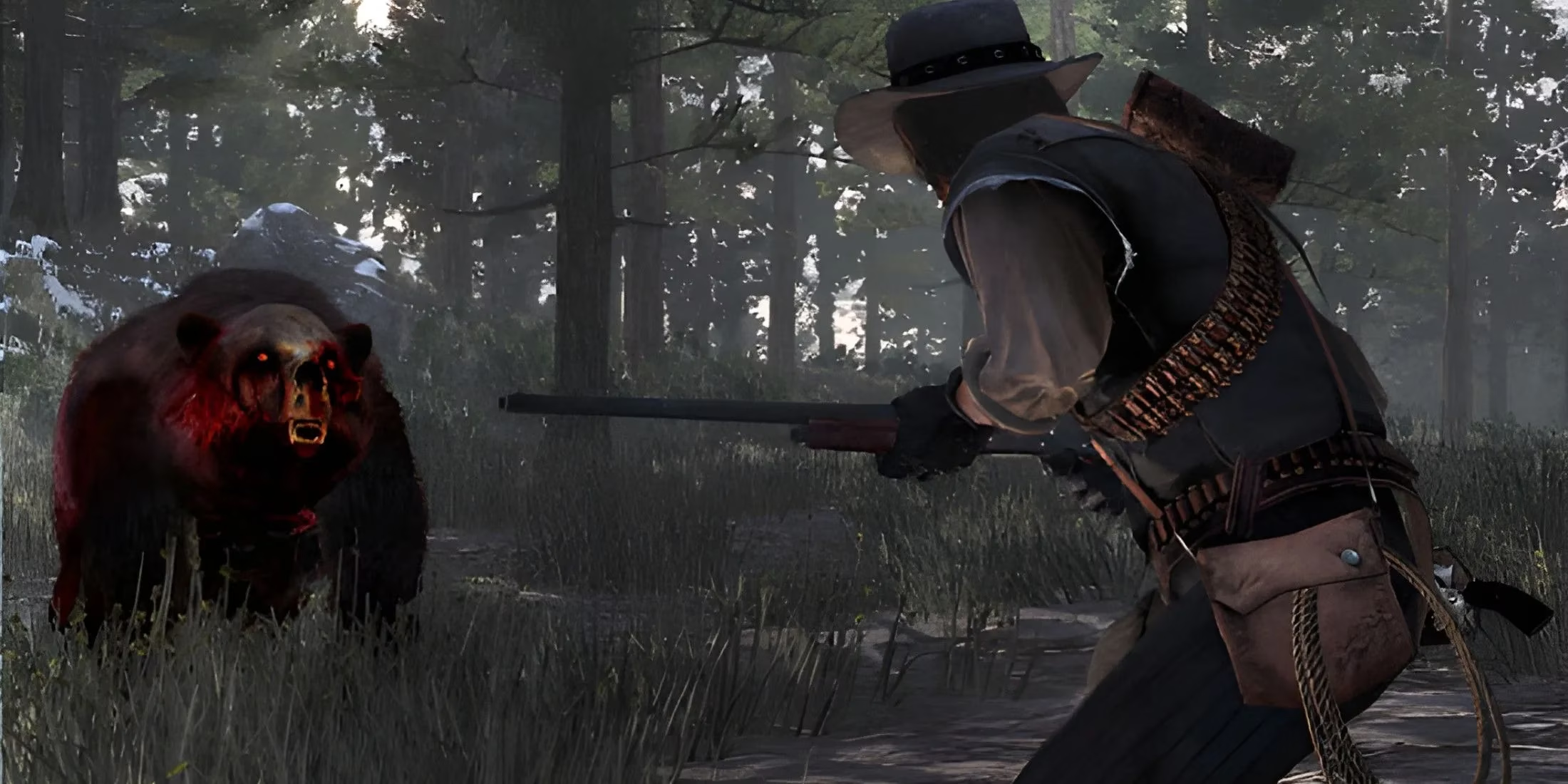
The expansion's premise was deceptively simple yet brilliantly executed. A mysterious zombie plague sweeps across the frontier, infecting John's beloved family—Abigail, Jack, and the perpetually afflicted Uncle. His quest for a cure transforms the familiar, lived-in world into a gothic playground teeming with shambling undead, mythical Horses of the Apocalypse, and an arsenal of unique, often macabre weaponry. The tonal shift was seismic. The grounded realism of cattle herding and duels at high noon gave way to frantic survival horror and darkly comic absurdity. This creative leap stood in stark contrast to Rockstar's other downloadable content at the time, particularly Grand Theft Auto IV's more conservative, narrative-focused episodes. Undead Nightmare proved the studio was not only willing but brilliantly capable of subverting its own meticulously crafted worlds for pure, unadulterated fun.
The Unfilled Grave: A Legacy of Absence
Yet, this very success has cast a long shadow over Rockstar's subsequent output. The studio's notorious reluctance—or perceived inability—to recapture this specific magic has become a point of fervent discussion among its community. The pattern is clear and, to many, frustrating:
-
Grand Theft Auto V (2013): Despite monumental commercial success, it received zero single-player story expansions, a decision that redirected focus entirely to the ongoing behemoth of GTA Online.
-
Red Dead Redemption 2 (2018): A masterpiece of environmental storytelling and hyper-realism, its post-launch support was similarly funneled into the multiplayer component, Red Dead Online, leaving dreams of an Undead Nightmare 2 to wither on the vine.
This strategic shift is not without its internal logic. Rockstar has increasingly prided itself on unparalleled realism and technological immersion. Red Dead Redemption 2's world breathes with an almost overwhelming authenticity—from the way snow gathers on a coat to the complex ecosystem of its wildlife. Introducing zombies or other fantastical elements into such a painstakingly realistic simulation could be seen as a jarring, potentially compromising creative decision. The first Red Dead Redemption, while detailed, operated with a slightly more stylized, game-y language that made the absurdity of Undead Nightmare feel like a natural, if wild, extension.
The Blueprint for a Different Future
Despite its absence in recent years, Undead Nightmare remains a powerful blueprint. It demonstrated that Rockstar's core strengths—world-building, character writing, and systemic open-world design—are not solely the domain of gritty realism. They are, in fact, wonderfully versatile tools. The expansion's creative success loudly proclaims that the studio possesses all the talent necessary to craft a phenomenal standalone fantasy game. Imagine the possibilities:
| Genre Potential | Rockstar's Applied Strengths |
|---|---|
| Gothic Horror / Weird West (Following Undead Nightmare) | Atmospheric open worlds, compelling anti-heroes, tense combat and survival mechanics. |
| High Fantasy | Vast, explorable kingdoms, deep lore and faction politics, epic scale narratives. |
| Sci-Fi / Cyberpunk | Satirical social commentary, dense urban verticality, innovative vehicle and gadget design. |
Freed from the shackles of mimicking reality, Rockstar's surplus of gifted writers, animators, and artists could build something truly transcendent. The studio's signature narrative depth, applied to dragons, starships, or vampires, is a thrilling prospect that remains largely untapped.
A Glimmer on the Horizon: GTA VI and Beyond
As the industry landscape continues to evolve in 2026, there is a renewed, cautious hope for a return to form. The upcoming Grand Theft Auto VI presents the perfect opportunity. While a zombie outbreak in Vice City might not fit, the inherently satirical and absurdist tone of the GTA series is a natural host for a major, outlandish single-player expansion. It wouldn't need to be horror; it could be anything from a psychedelic crime caper to a full-blown alien invasion narrative. The success of expansions like Elden Ring: Shadow of the Erdtree has reaffirmed the immense market and critical appetite for substantial, premium single-player content post-launch.
Furthermore, the live-service scene has grown increasingly volatile and hostile. Doubling down on Rockstar's historic strength—blockbuster, attention-grabbing narrative experiences—could be a shrewd differentiator. A major story DLC for GTA VI could capture the cultural zeitgeist in a way that routine online updates sometimes struggle to achieve.
Undead Nightmare was more than just a great piece of DLC. It was a statement—a brilliant, messy, and joyful declaration that even the most serious of worlds has room for the fantastical. Its echo persists not just as nostalgia, but as a reminder of a road not taken, a creative path brimming with potential that Rockstar has, so far, chosen to leave behind. As players wander the hyper-realistic worlds of today, a part of them still listens for the distant groan of a zombie, hoping that someday, the studio will once again dare to let its imagination run wild.