
In the sprawling, pixelated realms of video games, heroes get the glory, but it's often the villains who steal the show. Not the tragic, misunderstood souls with a tear-jerking backstory, mind you. No, we're talking about the truly despicable, the characters who are bad to the bone and wouldn't have it any other way. These digital miscreants perform acts of such profound betrayal, violence, and megalomania that any attempt at redemption would be laughable. Their moral compasses aren't just broken; they were never installed at the factory. From seductive fragments of darkness to cannibalistic cult leaders, let's meet the gaming world's most irredeemable scoundrels, the ones who make you glad it's just a game.
Nashandra: The Embodiment of Greed
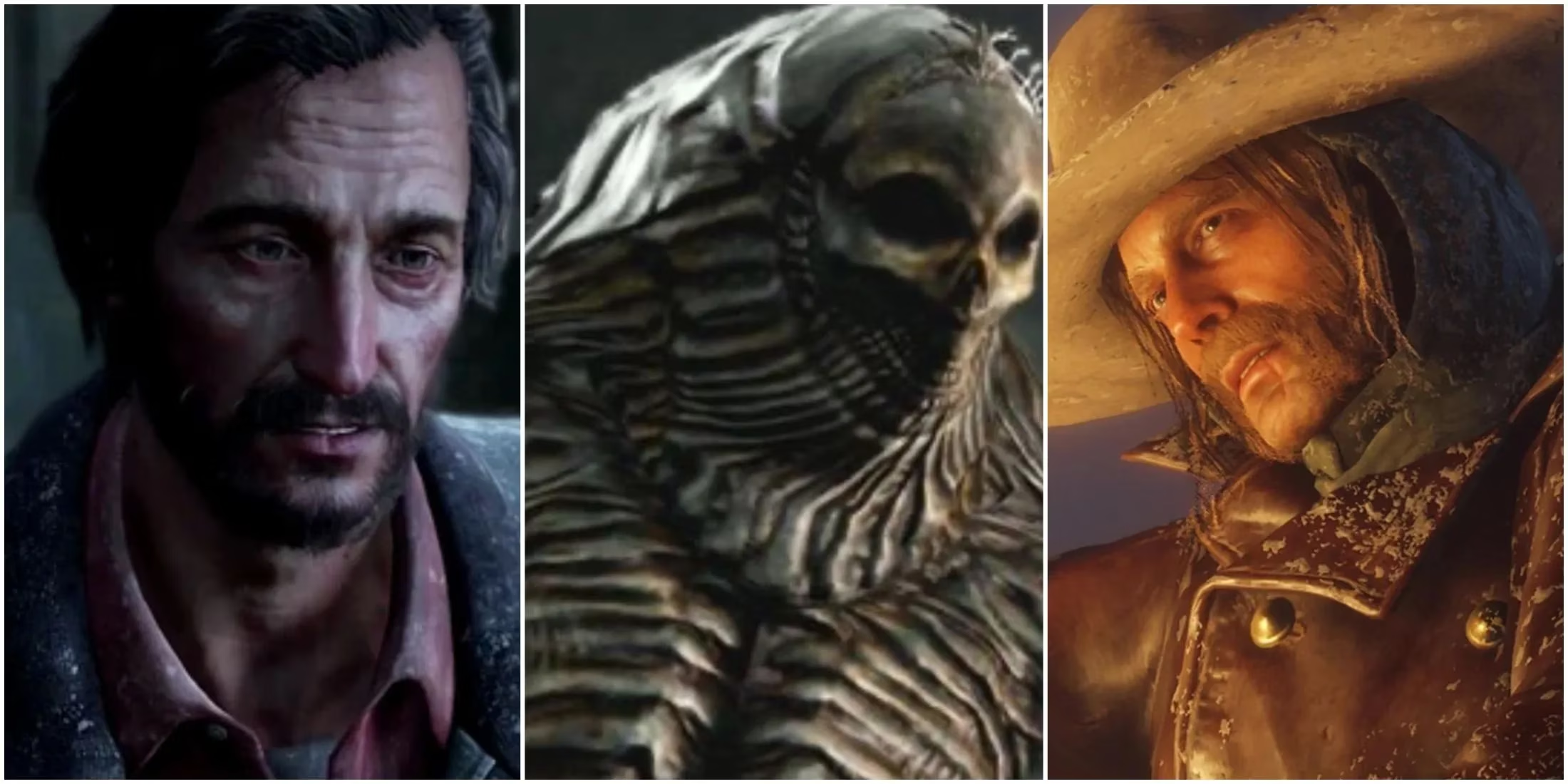
Seduction is a dangerous weapon, and few wielded it as devastatingly as Nashandra in Dark Souls 2. Born from the soul of Manus, Father of the Abyss, she wasn't just greedy; she was greed personified. Her entire existence was a singular, insatiable hunger for the Throne of Want. Her method? Charming the mighty King Vendrick into launching a catastrophic war against the land of the Giants, all to steal an ancient artifact for her. She didn't just start a war; she ignited a conflict that would echo for generations. And her treachery didn't stop there. She coolly manipulated the player character, the supposed protagonist, into doing all her dirty work, only to reveal her true, throne-usurping intentions at the very last moment. There's no tragic childhood or sympathetic motive here—just pure, inherited, world-breaking desire. She saw Vendrick not as a partner, but as a key. A tool. And she used him until he was no longer useful, a truly chilling display of calculated evil.
Mohg, Lord of Blood: The Cult Leader
Generally, founding and leading a mass-murdering blood cult is a pretty solid indicator that you've strayed from the path of righteousness. Enter Mohg from Elden Ring. Sure, he and his twin Morgott had a rough start, born as Omens and shunned to the sewers of Leyndell. But most people don't respond to childhood trauma by establishing a religion based on ritualistic maiden murder. Mohg's entry requirement for his "Mohgwyn Dynasty" was brutally simple: slay a maiden and present him with her blood-soaked cloth. The result? Rivers of blood literally flowing through his palace, an untold number of deaths on his hands, and a legion of experimented-upon Albinauric slaves. He was charmed, yes, but the bloodshed was all his own design. His family? Mere pawns. His followers? Sacrificial lambs. Mohg didn't just break bad; he built an empire on it.
Albert Wesker: The Megalomaniac Supervillain
Albert Wesker is the blueprint for the power-hungry, god-complex villain. Starting as the captain of S.T.A.R.S., his contact with the sinister Dr. Oswell Spencer awakened a thirst for ultimate power and immortality. Wesker didn't just want to join Spencer's plan for global domination; he wanted to steal it. He betrayed every single one of his colleagues, brainwashed Jill Valentine, experimented on the tragic Lisa Trevor, and masterminded the Uroboros virus—all with the goal of infecting the world and "weeding out the weak." He viewed humanity with utter contempt, seeing himself as a superior being destined to rule. There's no nuanced turn here; Wesker was always a sociopath waiting for his moment. He's the kind of villain who monologues about evolution while trying to unleash a global pandemic, and he does it all with a smugness that makes his eventual defeat so very satisfying.
Micah Bell: The Rat in the Camp
If a character's universal nickname among fans is "the Rat," you know they're special. Micah Bell from Red Dead Redemption 2 is a masterclass in slimy, self-serving treachery. He wormed his way into Dutch van der Linde's gang by saving Dutch's life, but any loyalty ended there. Micah was conniving, cruel, and spectacularly manipulative, seeing every situation as a potential benefit for himself alone. As Dutch's gang began to fracture, Micah expertly preyed on the leader's desperation and growing paranoia, whispering promises of one last, giant score and framing the loyal Arthur Morgan as a threat. His ultimate betrayal—selling out the gang to the Pinkertons and his cold-blooded murder of Arthur in the game's tragic ending—cemented him as one of gaming's most hated figures. He had no grand ideology, no tragic flaw. He was just a snake in cowboy boots.
Daniel: The Self-Serving Amnesiac
Amnesia: The Dark Descent presents a unique kind of evil in its protagonist, Daniel. He's not a traditional antagonist, but his actions are arguably more horrifying because of their intimate, personal nature. To save himself from the pursuing Shadow, Daniel, under the influence of Alexander, kidnapped and tortured innocent people to harvest their "vitae." He justified it as purging criminals, but his victims were largely blameless. The most haunting act? Hunting down and murdering a young girl named Elise to prevent her from revealing his crimes. The kicker? After being disgusted by his own actions, Daniel didn't seek redemption or punishment. He used a potion to give himself amnesia, wiping the slate clean in his own mind so he wouldn't have to face what he'd done. His evil wasn't grandiose; it was cowardly, selfish, and all too human.
William Birkin: The Corrupt Genius
Being Albert Wesker's best friend is a major red flag. William Birkin, the central antagonist of Resident Evil 2, shared Wesker's corrupt morals and god complex. Co-creator of the monstrous G-Virus, Birkin's ruthless pursuit of scientific glory directly caused the Raccoon City outbreak. After his research was stolen, he injected himself with the G-Virus to survive, transforming into a rampaging monster. In his wake, he fatally wounded his own wife, Annette, and infected his young daughter, Sherry, with the virus. His quest for revenge unleashed infected rats across the city, dooming its population. Any momentary act of "heroism," like saving Sherry from Mr. X, was likely just the virus's reproductive instinct driving him. Birkin's legacy isn't one of misunderstood genius, but of catastrophic, familial betrayal borne of ambition.
Handsome Jack: The Sadistic "Hero"
Pandora's self-proclaimed hero, Handsome Jack from the Borderlands series, is a masterpiece of narcissistic, sadistic villainy. He spouts nonsense about bringing "peace" while gleefully murdering unarmed civilians. His backstory involves abuse, but he perpetuates a far greater cycle of cruelty. He imprisoned his Siren daughter, Angel, using her as a tool to manipulate vault hunters and charge his doomsday key. When she died from the strain, he simply kidnapped another Siren, Lilith, to replace her. He murdered Bloodwing for sport and treated his Hyperion employees as disposable props for his amusement. Jack's evil is wrapped in a layer of hilarious, egotistical dialogue, which only makes the darkness underneath more potent. He didn't just want to rule; he wanted to be worshiped as a hero while committing atrocities, making him a uniquely despicable tyrant.
David: The Cannibalistic Predator
Sometimes, the most terrifying evil isn't world-spanning; it's quiet, personal, and hideously intimate. David from The Last of Us appears in the winter chapter as a seemingly reasonable leader of a starving community. The truth is far worse. David "solved" his group's hunger problem by turning them into cannibals, hunting, killing, and butchering strangers. When he captures Ellie, the horror deepens. It becomes chillingly clear his interest isn't purely culinary. He makes predatory, intimate advances toward her, implying a sexual threat that adds a deeply unsettling layer to his savagery. There's no elaborate history given. David is simply a sadist who chose cannibalism and predation as his means of survival and control, making his brief appearance one of the most genuinely disturbing portrayals of human evil in gaming.
In the end, these characters stand out not because they were forced into darkness, but because they embraced it, nurtured it, and used it to shape their worlds. They remind us that in gaming, as in life, the most compelling monsters are often those who look in the mirror and see nothing wrong at all. 😈