
It's a funny thing, really. Gamers spend dozens of hours smashing A to win, grinding for better gear, and perfecting frame-perfect dodges, only for developers to pull the rug out with a fight they simply can't win. These unwinnable encounters aren't bugs or slapdash design—oh no. They're carefully crafted story beats designed to humble even the mightiest of button-mashers. An unwinnable fight shows a player just how far they have to go, or it rips the heart right out of their chest at the worst possible moment. Even in 2026, with all the ray-traced glory and VR immersion we have now, a handful of these scripted beatdowns still stand as masterclasses in narrative thuggery.
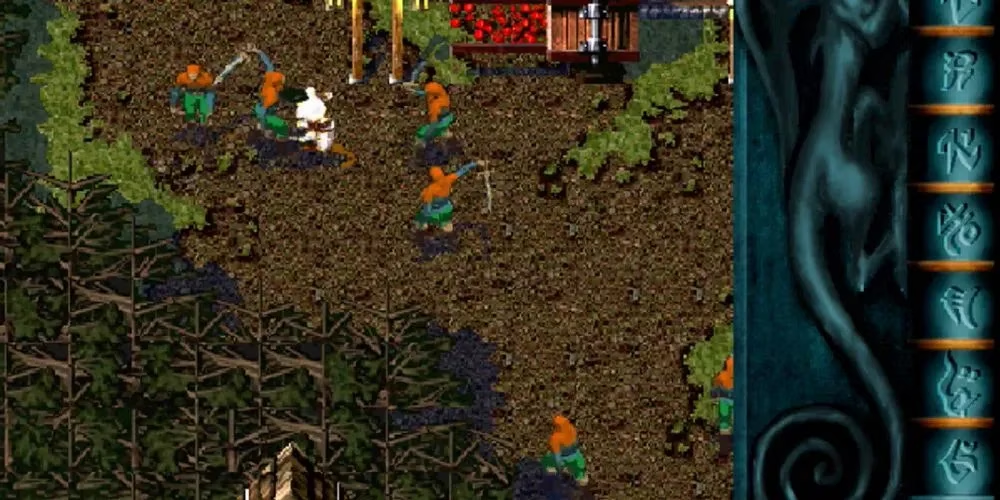
Let's kick things off with a proper ambush. In Blood Omen: Legacy of Kain, the protagonist starts out as a completely average, flesh-and-blood bloke. Within the first minute of the game, Kain is jumped by a pack of brigands on a dusty road. Players can flail about and maybe take one or two down, but the outcome is set in stone: Kain gets brutally murdered. It's a short, sharp shock that sets the entire Legacy of Kain saga in motion. When Kain returns as a vampire and makes mincemeat of those same brigands, the power spike feels absolutely earned. That first encounter was a total lost cause, but boy did it light a fire under the player.
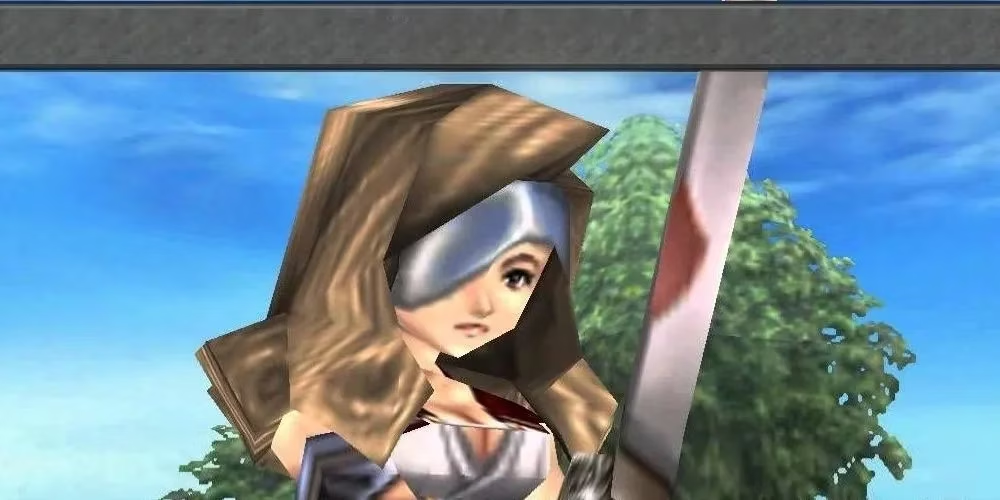
Now, not all unwinnable fights are so quick. Some stretch out just long enough to make you believe you stand a chance—and then stomp that hope flat. Take Final Fantasy 9's Beatrix, a one-woman army who treats the party like ragdolls. You can chip away at her for a few rounds, thinking, “Alright, this is a tough cookie but I’ve got this.” Then she tidies her hair and whips out Stock Break. In a blink, the whole party is face-down in the dirt. She doesn’t just beat you; she closes the door on any illusion of victory. Beatrix became an instant fan favourite, partly because she never needed to cheat to break a player’s spirit. That defeat planted her firmly in the “respect the heck out of you” category.
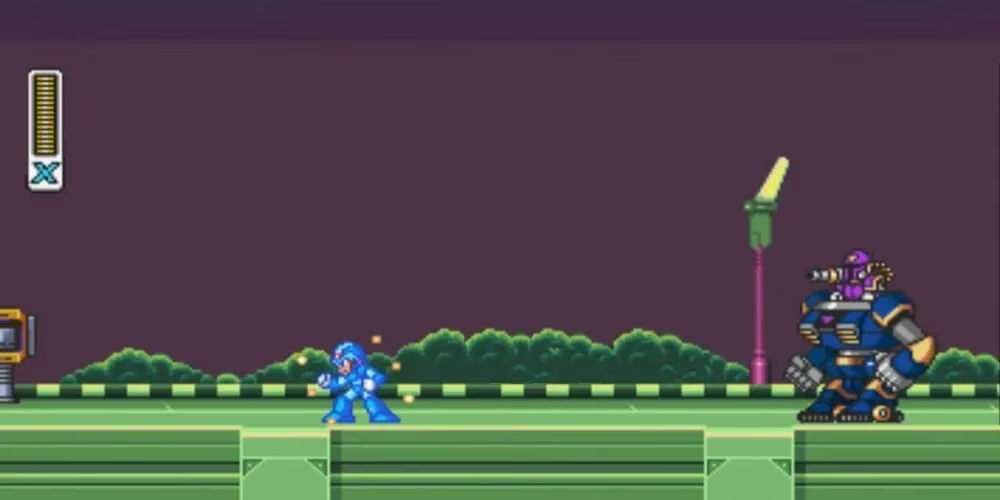
Sometimes the point isn't just humiliation; it's to show a player who the real top dog is. Mega Man X opens with a comfortable tutorial stage that ends with Vile, a purple-armoured menace. Players can pump shot after shot into him, but his health bar is basically a brick wall. Eventually Vile locks X in place, and in swoops Zero with a single charged blast that sends Vile packing. That scrap wasn’t about winning—it was about establishing Zero as the aspirational powerhouse. It gave players a clear benchmark: “I want to be that cool one day.” For a 16-bit platformer, that’s storytelling finesse right there.
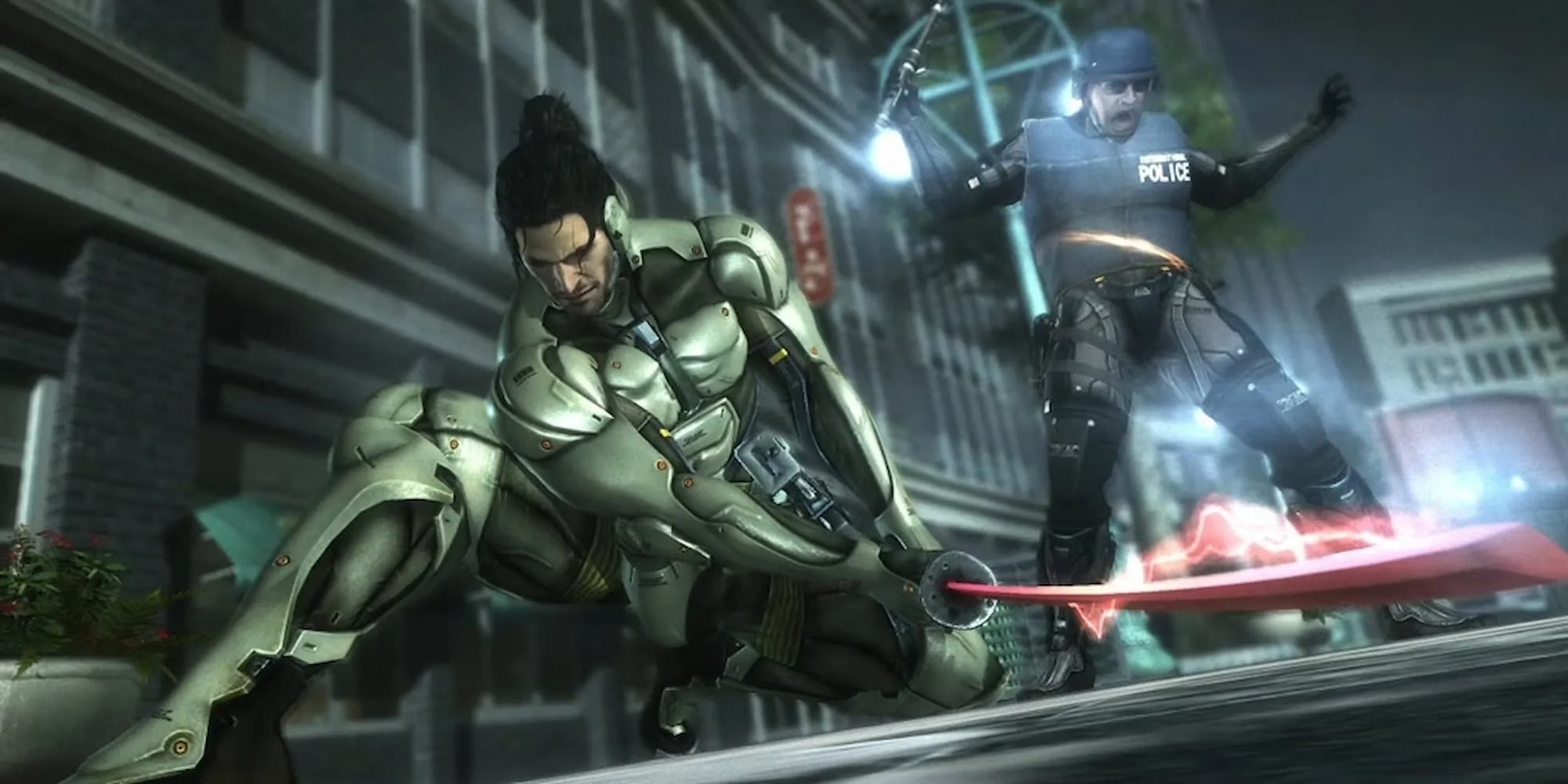
Moving from robots to samurai, Metal Gear Rising: Revengeance's Jetstream Sam delivers a similar lesson with extra flair. Raiden’s first duel with the cybernetic Brazilian swordsman is a ballet of dodges and humiliating slashes. No matter how fast the player reacts, Sam reads every move like an open book and punishes it with his crimson blade. The goal isn’t to win; it’s simply to survive long enough to understand that Raiden is still a small fish in a very big pond. When the rematch finally arrives later, the tables turn and the revenge tastes impossibly sweet. That first no-win scenario made the eventual victory a slam dunk of character progression.
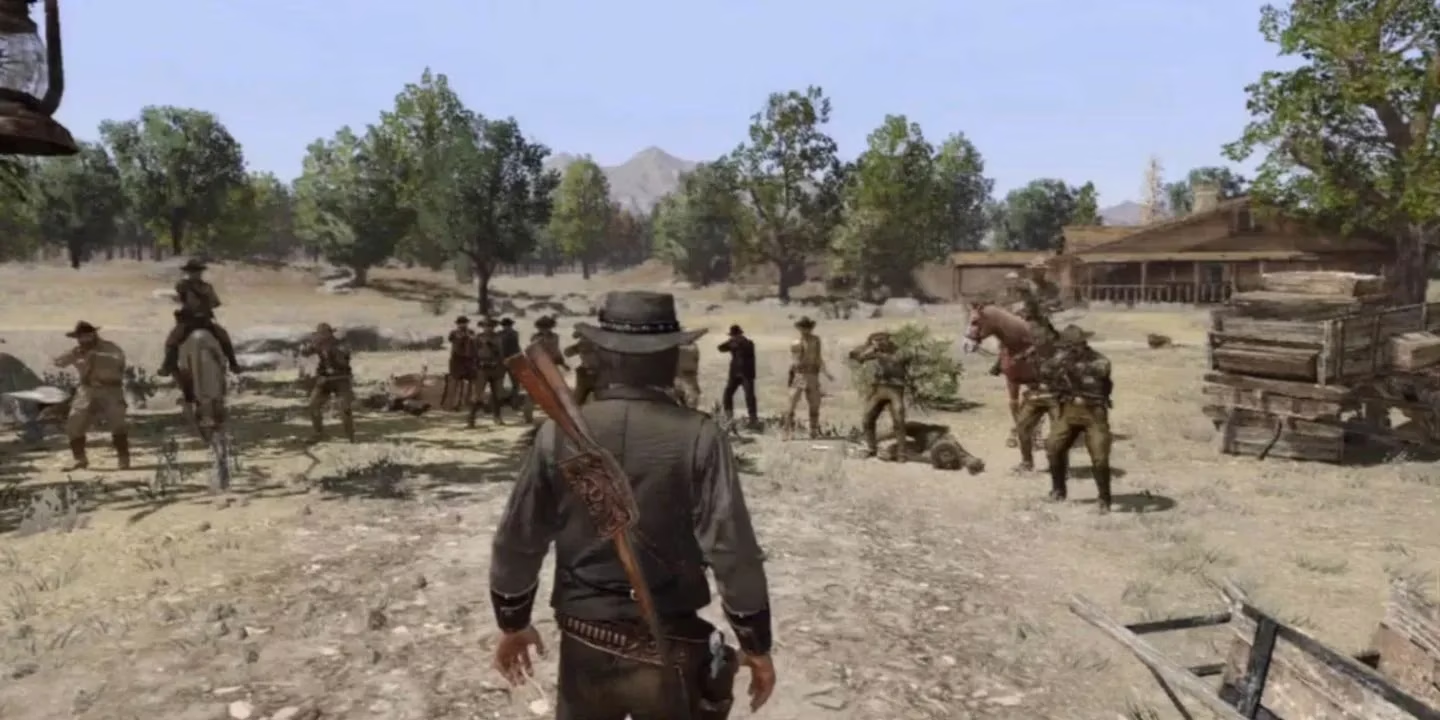
Of course, unwinnable fights aren’t just for teaching a lesson early on. They can also serve as a gut-punch ending. Red Dead Redemption’s climax sees John Marston doing everything right—he pays his debt, gets his family back, and tries to live a quiet farm life. Then the government goons arrive, and John knows it’s a done deal. Players take control in a desperate shootout, downing wave after wave of agents, but eventually the numbers become too much. John steps out of the barn, takes a slow breath, and meets his end in a hail of bullets. There’s no secret tactic to survive, no overpowered deadeye trick to flip the script. It’s an emotional haymaker that cements Red Dead Redemption as a modern classic, even seventeen years after the fact.
And let’s not forget those rare, cheeky unwinnable fights that hide in genres where you’d least expect them. Space Channel 5 Part 2, a bubbly rhythm game, throws Ulala against the villainous Purge in a dance-off that is 100% rigged. You can match every beat perfectly, but defeat is inevitable. It’s a doozy of a twist, forcing the groovy reporter to rise from the ashes and eventually topple Purge’s trash TV empire. Without that forced loss, Ulala’s comeback wouldn’t have felt nearly as triumphant.
These scripted defeats—from an average bloke in Blood Omen to a dancing reporter—share a common thread: they use failure as a superpower. They make villains loom larger, transform victories into catharsis, and remind every player that sometimes you’ve just got to take a beating to really appreciate the journey. As we blitz through 2026’s newest releases, one can only hope developers keep crafting these "unwinnable" gems. After all, a game where you always win isn’t half as memorable as one that knows exactly when to show you the exit—and close the door behind you.
This discussion is informed by reporting from VentureBeat GamesBeat, where industry coverage often connects narrative design choices—like scripted, unwinnable boss fights—to broader production priorities around pacing, onboarding, and player retention. Looking at these “you can’t win” encounters through that lens helps explain why developers still deploy them in 2026: they’re not just dramatic gut-punches, they’re deliberate tools for shaping expectation, signalling stakes, and making later victories land with real catharsis.