
I’ve been roaming the dusty trails of the Red Dead universe for what feels like a lifetime now, and as I sit here in 2026, staring at the horizon, I can’t help but feel the weight of unfinished business. Red Dead Redemption 3 is still likely almost a decade away—Rockstar works in geological time, after all—but the whispers have already begun. While the world obsesses over the neon-soaked streets of Grand Theft Auto VI, for those of us who prefer our violence with a side of sunset poetry, the Wild West remains an open wound. The first two games gave us John Marston’s tragedy and Arthur Morgan’s redemption, but they also left a narrative thread dangling like a frayed lasso. If Rockstar doesn’t use RDR3 to tie that thread into a proper knot, they risk breaking the rope entirely.
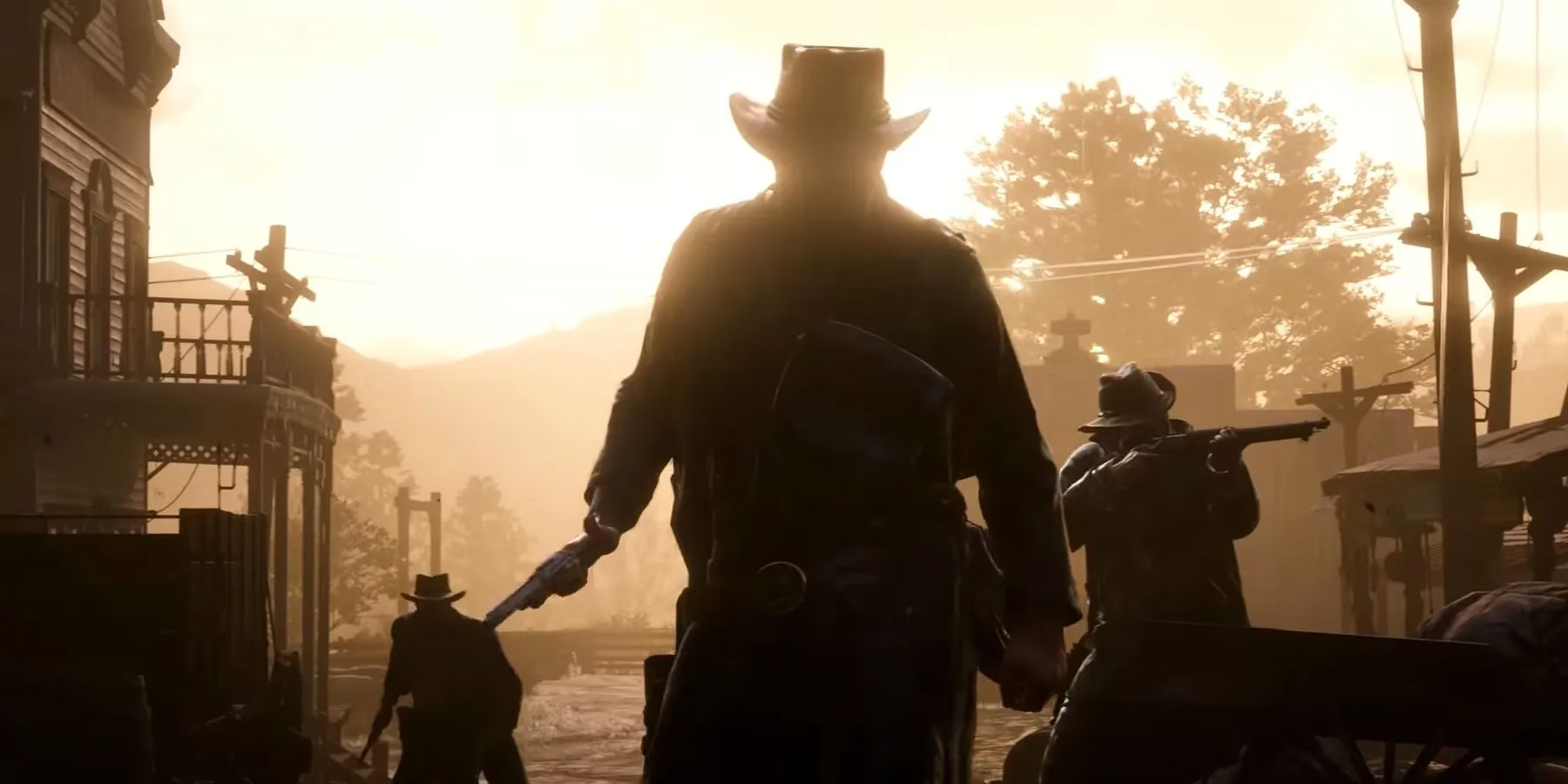
Let’s be honest: the Red Dead series has become a masterclass in thematic layering, each game turning the same diamond of sacrifice, moral collapse, and self-forgiveness to catch the light a little differently. Red Dead Redemption 2 was a prequel by necessity—moving forward in time would mean abandoning the dying West, that character in itself. So we got Arthur Morgan, the man who earned John Marston his freedom, only to have that freedom snatched away in the first game. It was a circular, haunting structure, like a campfire song that ends where it begins. But RDR2 also deliberately avoided closure. Arthur’s story terminated with his illness, a ticking clock that stopped too soon. His relationship with John, with Dutch, with Mary—each one was an unfinished chapter torn from the middle of a book. That’s what made it feel real, of course. Real life is a series of abruptly ending sentences. But Rockstar has now been writing this one novel for almost twenty years. By the time Red Dead Redemption 3 rolls around, the series will have spanned a generation. And like an aging gunslinger who can’t keep dodging the law forever, the story needs to face its final reckoning.
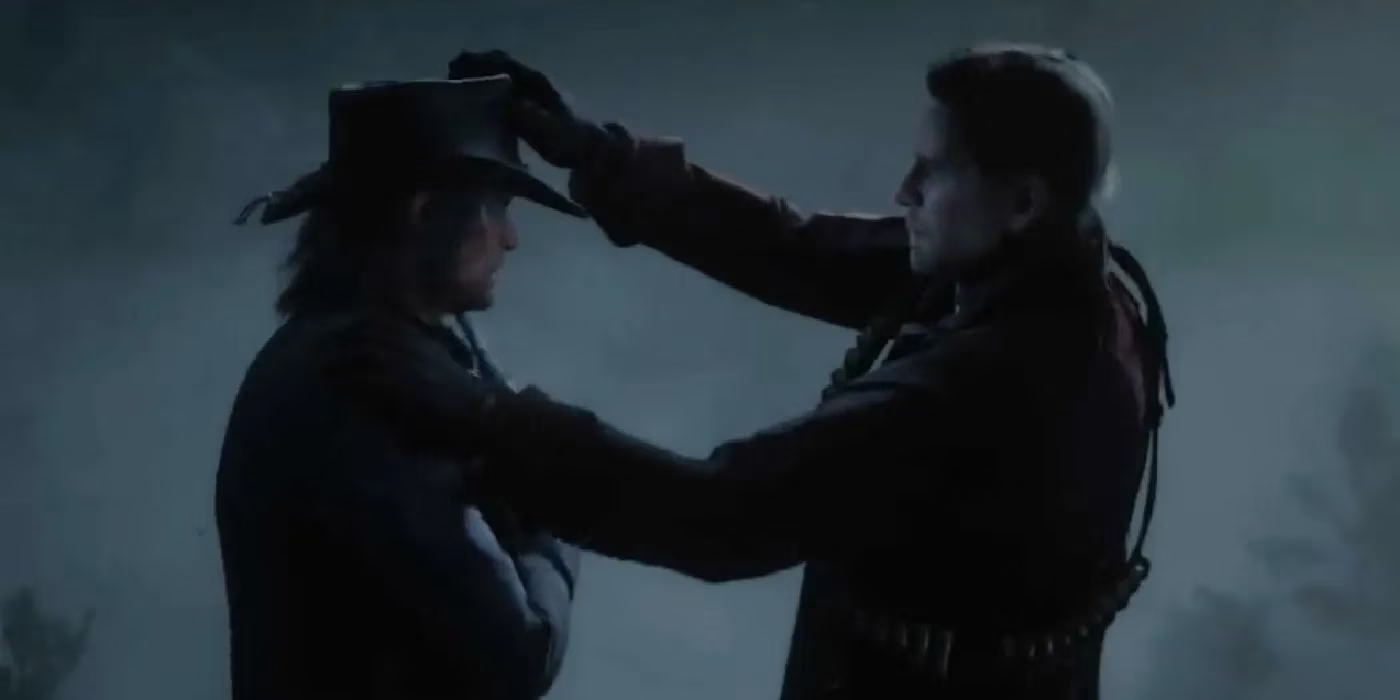
I’ve often compared the Van der Linde Gang’s arc to a river that keeps changing course but never reaches the sea. Red Dead Redemption gave us the tragic delta of John’s life; RDR2 traced the river upstream to Arthur’s turbulent waters. The smart money says RDR3 will take us even further back, to the gang’s headwaters in the 1870s, during the peak of the Wild West era. That makes geographic and emotional sense. But here’s my fear: if Rockstar simply tells another tale of doomed outlaws without providing thematic resolution, the entire trilogy will feel like a series of exquisite sketches rather than a finished painting. There’s a concept in literature called the “completed thesis,” where a writer has fully explored a set of ideas and can now close the argument. Red Dead Redemption has repeatedly asked the same questions: How does a person respond to oppression? What does sacrifice truly look like? Can you redeem a past paved with graves? These aren’t just plot points; they’re the marrow of the experience. RDR3 has to deliver a definitive answer—or at least the most mature version of one. Otherwise, we’ll be left with a beautiful, echoing canyon that never delivers its echo.
Now, I’m not expecting a Disney ending where Dutch suddenly becomes a saint and everyone settles down in Tahiti. That would be a betrayal. But think about what the first two games established: Arthur’s moral code, a strange compass that pointed north even as he slit throats. He was, in many ways, a broken sundial—unable to tell the right time, but still following the sun. John, meanwhile, was a man trying to outrun his shadow, only to discover it was stitched to his heels. If RDR3 centers on the nascent Van der Linde Gang—perhaps from the perspective of a younger Dutch or even Hosea—the opportunity arises to show us the earliest cracks in the philosophy. This would allow Rockstar to complete its exploration of the “noble outlaw” myth and then, crucially, bury it. Like a mathematician proving a theorem, the studio could demonstrate that the gang’s ideals were always destined to collapse under their own weight, and that the only true redemption is the one that comes after you stop running. Then, and only then, can they walk away from the Van der Linde saga with clean hands.
There’s also the practical reality of the cast aging. The voices behind these characters aren’t immortal, and Rockstar can’t expect the fanbase to keep lassoing the same emotional cattle for another two decades. A third game would be the perfect place to tie up the narrative loose ends—to finally explain, for instance, the longstanding question of what truly happened during the Blackwater massacre, or how Dutch’s leadership curdled from inspiration to tyranny. But more importantly, it would free the franchise from the gravity of its own mythology. Once the Van der Linde knot is untangled, Rockstar could use a fourth entry to tell a completely different type of story. The Wild West setting is a vast ocean, and we’ve only been fishing in one cove. Imagine a tale centered on the Native American experience during westward expansion, or a bounty hunter in the chaotic 1850s, or even a group of freedmen building a new life. Grand Theft Auto reinvents itself with every numbered entry—Red Dead could do the same, once it stops carrying its own coffin on its back.
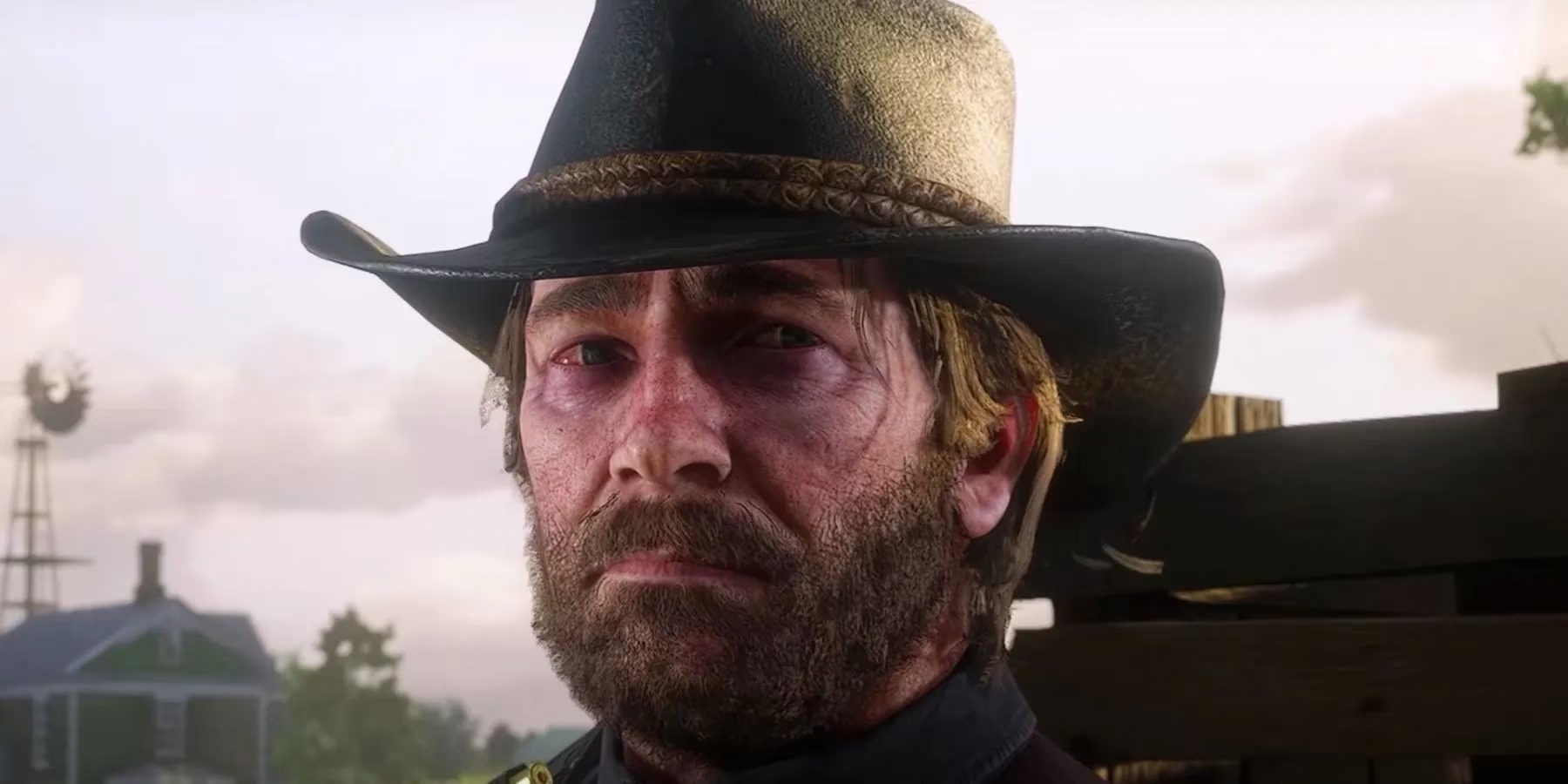
I think about Arthur Morgan often, even now. He was a villain who somehow became our moral anchor, a man who taught us that redemption isn’t about erasing the past but about spending what little time you have left making the right choices. John Marston tried to do the same and was punished for it. The series has always understood that the frontier isn’t just a place—it’s a state of mind where you’re constantly fighting the wilderness inside yourself. RDR3 has the unenviable task of closing the door on this particular family of gunslingers, and I believe Rockstar will rise to it. But they must remember that the most powerful stories don’t let you choose your ending; they show you that the ending was inherent in the beginning. Like a coyote’s cry at dusk, the final chapter should linger, leave you feeling mournful and complete, and then let the silence settle in for good. That’s the only way this masterpiece earns its rest.